
The smell has a source. We find it without tearing your home apart, with access decisions based on where the concentration is strongest.
Same-week dispatch
LA attics regularly exceed 120°F in summer, which compresses the extraction window. We locate the source, remove it, and neutralize the odor.
Every dead rodent removal job follows the same four-step sequence, and the sequence matters.
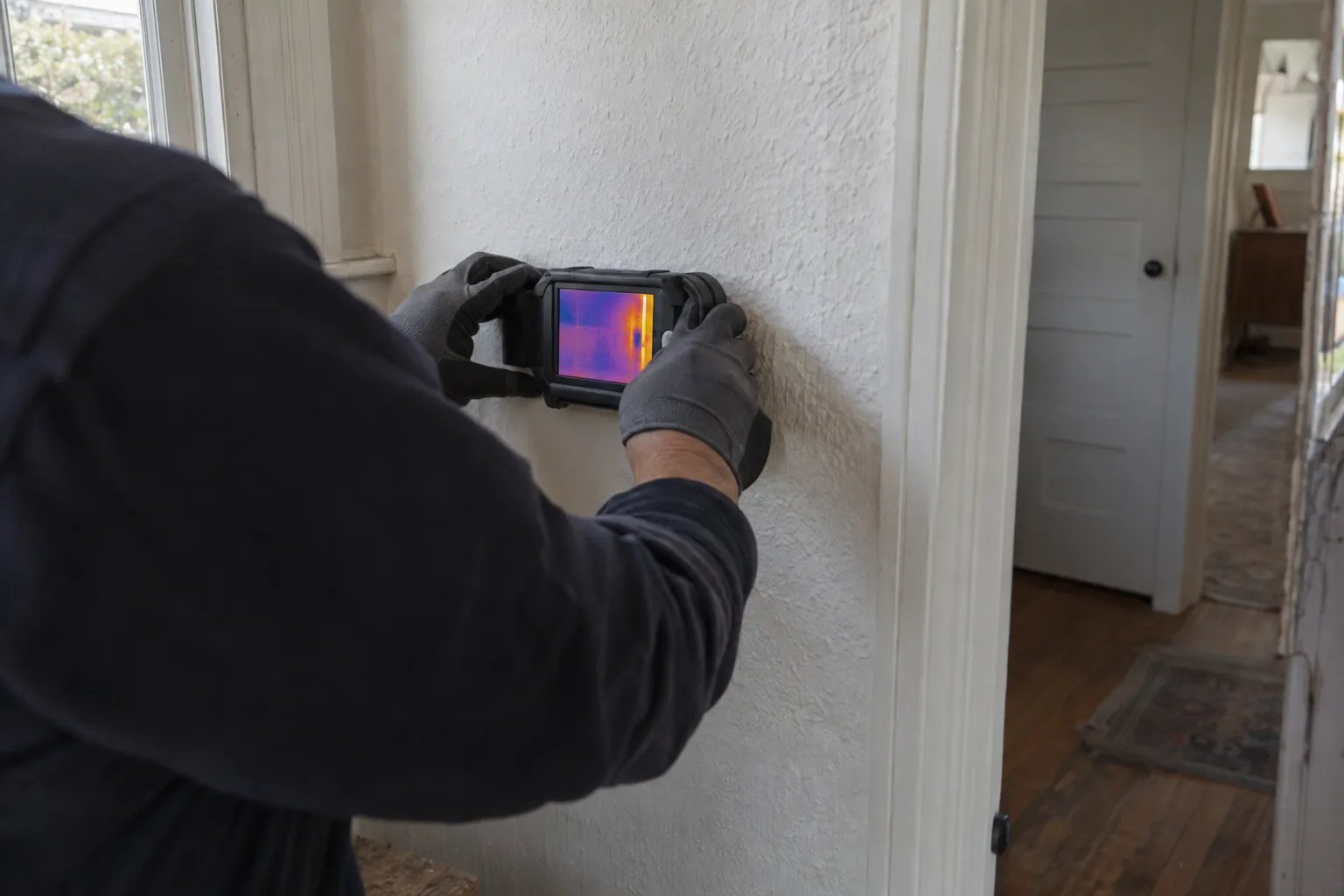
We work the affected zone systematically, wall surface by wall surface, ceiling section by ceiling section. The odor concentration point, the location where the smell of decomposition is measurably strongest, tells us where to focus. We do not open access points until the concentration zone is confirmed.
Once the zone is confirmed, we identify the least invasive access path available. Attic access from above. Crawl space access from below. Wall access only when neither alternative reaches the confirmed location. The access decision is explained to the homeowner before any work begins.
The animal is removed from the location and disposed of properly. We note the condition of the surrounding area, presence of nesting material, evidence of urine saturation, and structural contact, because those observations determine what the neutralization step covers.
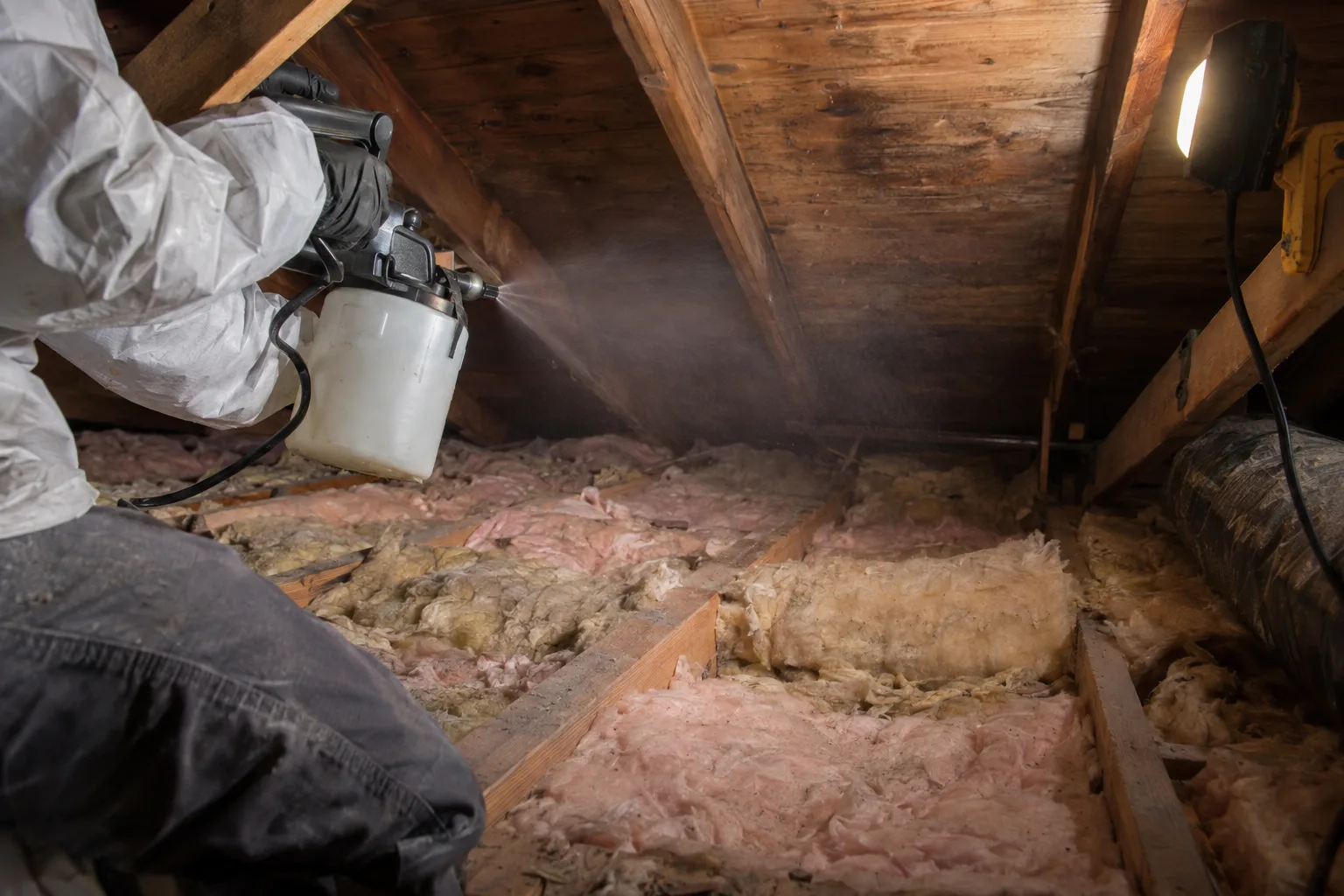
Odor neutralization, the chemical process of breaking down the volatile compounds produced by decomposition, is distinct from masking. A masking agent covers the smell temporarily. A neutralizer eliminates the compounds that produce it. We apply neutralizing treatment directly to the affected surface inside the cavity.
In attic cavities where a roof rat has been nesting for an extended period, the insulation layer may require assessment. Urine saturation in insulation holds odor even after the carcass is removed. We identify that condition during the extraction step and advise on next steps before closing the job.
Los Angeles heat accelerates decomposition, and that changes how quickly you need to act.
The decomposition timeline, the period during which a dead rodent produces the strongest odor, is typically described as one to three weeks. That estimate assumes a temperature range closer to 65 to 70°F. In a Los Angeles attic in summer, temperatures regularly exceed 120°F. In a wall void facing west, afternoon heat pushes well past that.
At those temperatures, a roof rat carcass reaches peak odor output within 24 to 48 hours. The active decomposition phase compresses significantly. The smell intensifies faster and the window for extraction before secondary contamination sets in is shorter.
Tarzana, Encino, and Woodland Hills, the western Valley communities we serve, run consistently hotter than coastal LA. A wall void on the south-facing side of a home in Tarzana in August is a different environment than a wall void in a mild coastal climate. That local reality is built into how we respond, not treated as an afterthought.
1-3
Weeks at peak intensity in LA's climate
6-8"
Typical wall opening size, not 3 feet
A dead rodent inside a wall or attic produces a smell that gets worse for days before it levels off.
You already know something died. The question is where.
That question is harder than it sounds. Odor travels. It moves through wall cavities, follows HVAC return paths, and pools in rooms that have nothing to do with where the animal actually is. A smell strongest in the hallway does not mean the carcass is in the hallway wall. It means air is moving in that direction.
Waiting it out is not a workable option. The smell does not peak and then disappear in a few days. In LA's climate it stays at peak intensity for one to three weeks, sometimes longer, depending on the animal's size and where it sits in the structure.
The first job is location. Everything else follows from that.
Locating an inaccessible carcass is a systematic process, not a guess.
Jobs come in where a homeowner has already opened sections of drywall before calling. The smell was in neither one. They went by where it seemed strongest from across the room. That is understandable, but odor concentration in a wall cavity does not work the way intuition says it does.
What we do first is work the exterior of the wall systematically. We identify where the concentration is highest, not where the smell seems to come from standing in the room, but where it is measurably strongest at the wall surface. A dead rat that entered through a pipe penetration behind the dishwasher may produce a smell that fills the entire kitchen. The carcass itself might be two rooms away, having traveled the wall cavity toward a warmer section of the building.
We use that concentration mapping to narrow the location zone before any access decision is made. On most jobs we can get within a 12 to 18 inch range before opening anything. That matters, because opening a wall in the wrong location adds a repair cost without solving the problem.
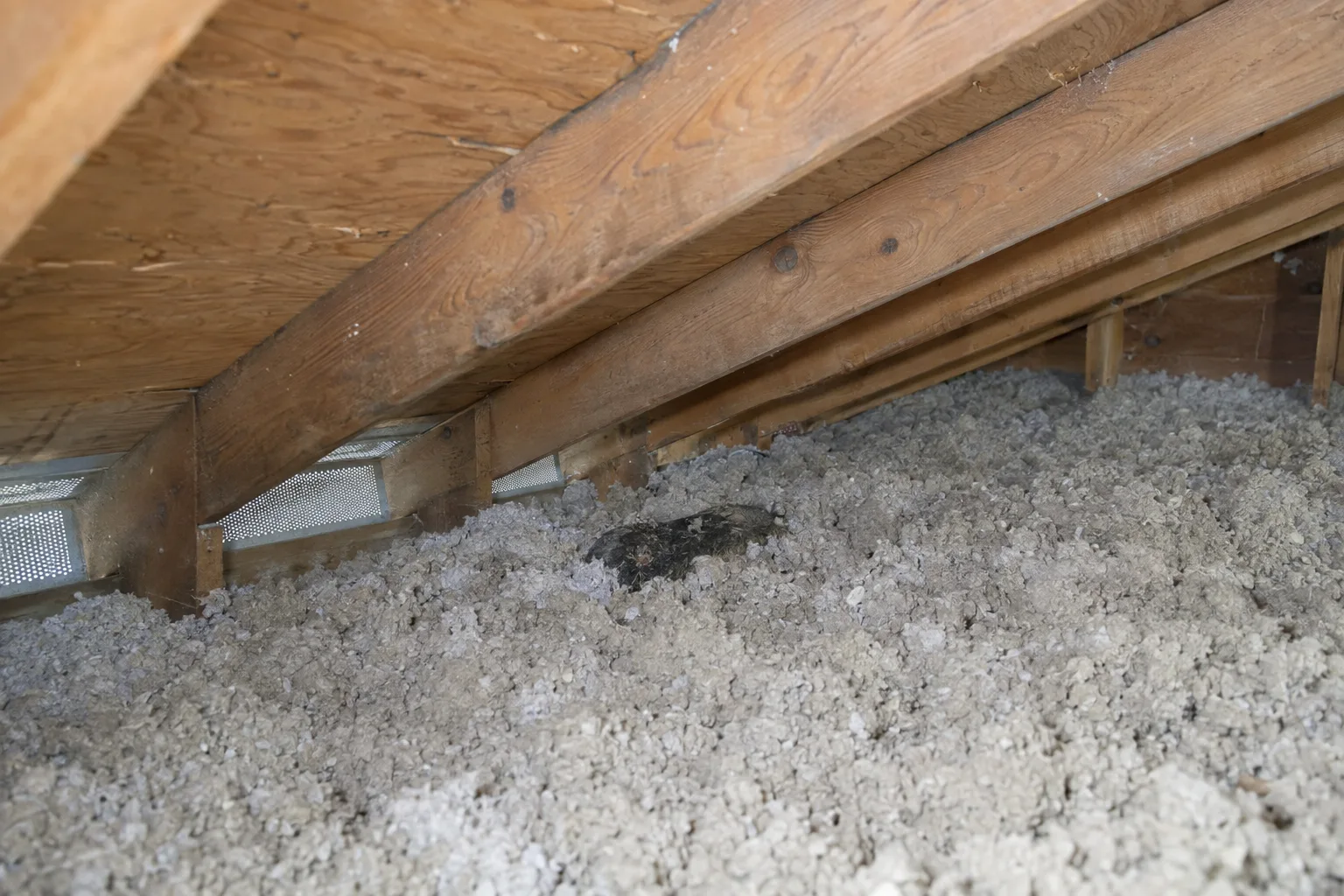
The attic cavity is a separate case. Roof rats often die within the insulation layer after entering through a Spanish tile bird block or a deteriorated soffit. In those situations the smell travels down through the ceiling and pools in the room below. Homeowners routinely search the wrong floor. We go to the attic first on any job where the smell is concentrated in a ceiling zone rather than a wall zone.
Minimally invasive access means choosing the smallest necessary opening based on confirmed location, not assumption.
The question homeowners ask most is: do you have to open my wall?
Sometimes, yes. The answer depends entirely on where the carcass is confirmed to be, not on a default approach that assumes wall access is always required.
A wall void is a sealed space. An attic cavity is generally accessible from above without cutting drywall. A crawl space is accessible from below. When the location mapping points to an attic cavity or a crawl space section, we access it from the entry point that already exists. The wall does not get touched.
When the carcass is genuinely inside a wall void, confirmed rather than estimated, we open the smallest area that gives enough room to extract the animal and treat the surrounding surface. That is typically a 6 to 8 inch section, not a 3-foot opening. We explain the access decision before we make it, and we give the homeowner a clear picture of what the repair scope will be.
Carcass removal alone does not end the smell. The secondary odor source requires its own treatment.
Most homeowners expect the smell to stop when the animal is out. It often does not.
A wall void that has held a decomposing roof rat for five days contains odor-producing material beyond the carcass itself. The urine, nesting debris, and grease trails in the immediate area continue to off-gas after extraction. That is the secondary odor source, residual contamination that persists after the primary cause is removed.
In Los Angeles attics this is particularly relevant. Roof rats travel established routes and leave grease trails along rafters and insulation surfaces as they move. If an animal has been nesting in a specific section of the attic for weeks, that zone contains active biological material that removal alone does not clear.
Our neutralization treatment is applied inside the cavity, not just at the surface. For wall voids, the treatment enters through the same access point used for extraction. For attic spaces, the affected insulation zone is treated directly.
The job is not finished until both the carcass and the residual contamination zone are treated.
No. The answer depends entirely on where the carcass is confirmed to be. Attic cavities are usually accessible from above and crawl spaces from below without cutting drywall. We only open a wall when the location mapping confirms the carcass is inside a wall void, and even then we open the smallest section needed, typically 6 to 8 inches.
In LA's climate, the smell stays at peak intensity for one to three weeks, sometimes longer, depending on the animal's size and where it sits in the structure. Warm temperatures keep odor-producing compounds active longer, so waiting it out is not a workable option.
Because of the secondary odor source. Urine, nesting debris, and grease trails in the same cavity continue to off-gas after extraction. That residual contamination requires its own treatment, which is why we neutralize the odor at the source in the same visit, not just remove the animal.
Not necessarily. Odor travels through wall cavities and follows HVAC return paths. A smell strongest in one room often means air is moving in that direction, not that the carcass is there. We map where the concentration is measurably strongest at the wall surface before opening anything.
Same-week scheduling is standard. Our crew reaches west Valley homes quickly, a practical advantage when LA's heat compresses the extraction window. Call (323) 805-0173 or email in**@*******us.com to get on the schedule.
We dispatch crews from Tarzana to residential properties across the San Fernando Valley and the broader LA metro. Same-week scheduling is standard.
Dead rodent removal is a time-sensitive service. The longer a carcass remains in an enclosed cavity in this climate, the more the secondary odor source builds. Tell us where the smell is strongest and we will take it from there.
Rodent R Us · 5336 Mecca Ave, Tarzana, CA 91356 · in**@*******us.com