
After the Rodents Are Gone, the Contamination Needs Its Own Service
Droppings, urine trails, and nesting debris require a contained professional process, not a sweep.
Rodent fecal contamination, the accumulation of droppings, urine, and nesting material in an enclosed space, is an active health concern as long as it remains in the structure.
The rodents are gone. The traps are pulled. The entry points are sealed. Most homeowners assume that means the job is finished. It is not.
What stays behind is rodent fecal contamination, dried droppings, urine trails, and nesting debris spread across attic insulation, crawl space flooring, and any interior surface the animals used as a travel route. Dried material doesn't deactivate with time. It stays where it landed until something disturbs it.
That's the part that matters.
Disturbance is what creates the risk.
Los Angeles attics are the primary nesting zone for roof rats, and after even a few active months, the contamination footprint is significant.
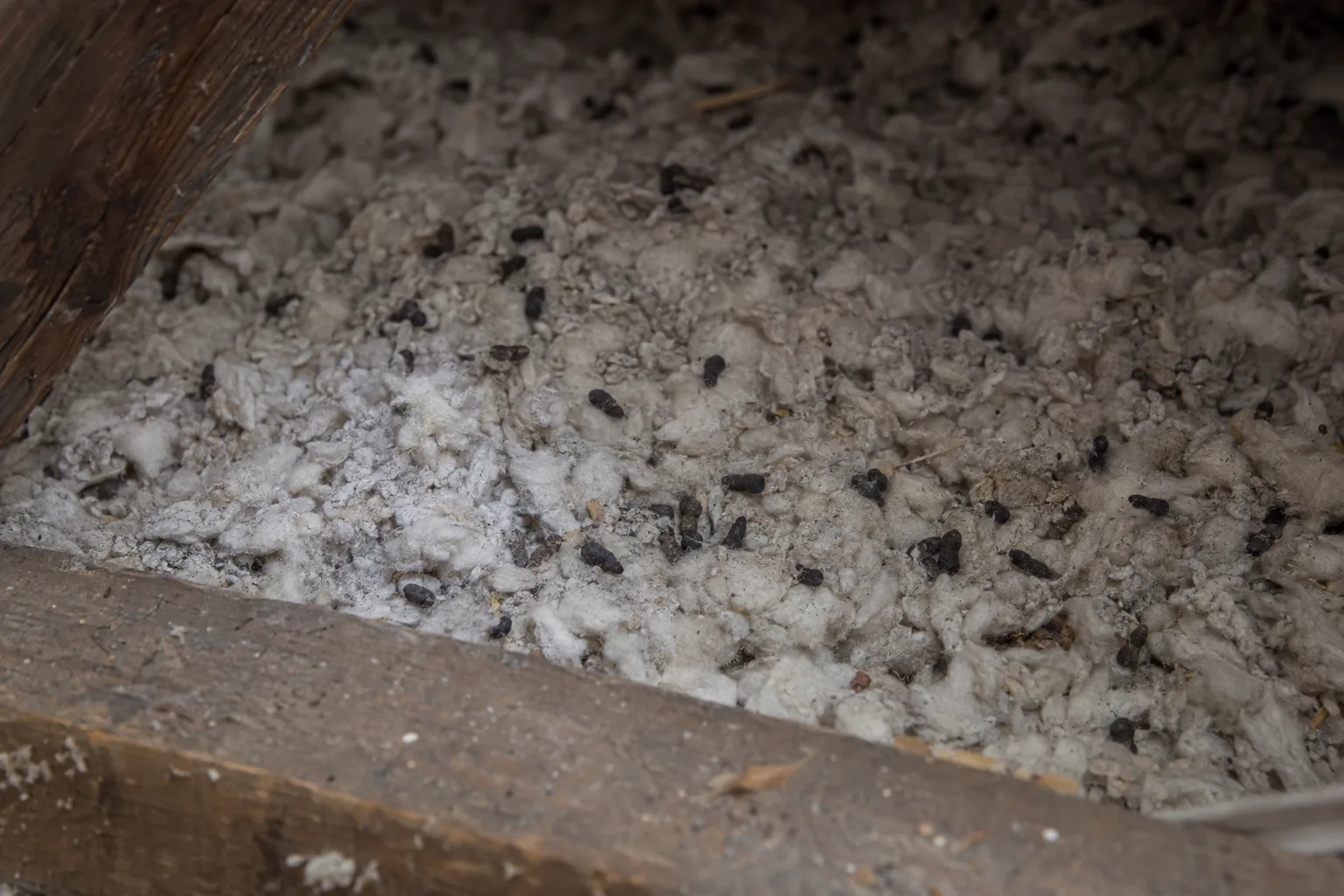
Here's what most homeowners don't realize about attic contamination in Los Angeles: roof rat colonies don't use one corner of an attic. They spread across the full floor of the insulation layer. A colony active for three to four months in a standard San Fernando Valley attic can leave droppings across every square foot of accessible surface, not concentrated in one zone.
Older homes in Reseda, Canoga Park, and Van Nuys are particularly affected. These properties often have original blown-in insulation from the 1960s and 1970s, loose-fill material that roof rats move through freely. Droppings settle through the fibers. Urine soaks into the layer beneath. By the time an HVAC technician or homeowner goes up to investigate, the disturbance area is often far larger than expected.
Crawl spaces present a different version of the same problem. Ground contact accelerates urine absorption into the substrate. Nesting material compacts against pipe runs and beam surfaces. The contamination profile is lower-volume but more concentrated.
Most homeowners discover attic contamination when someone with a reason to be up there finds it, not when they go looking.
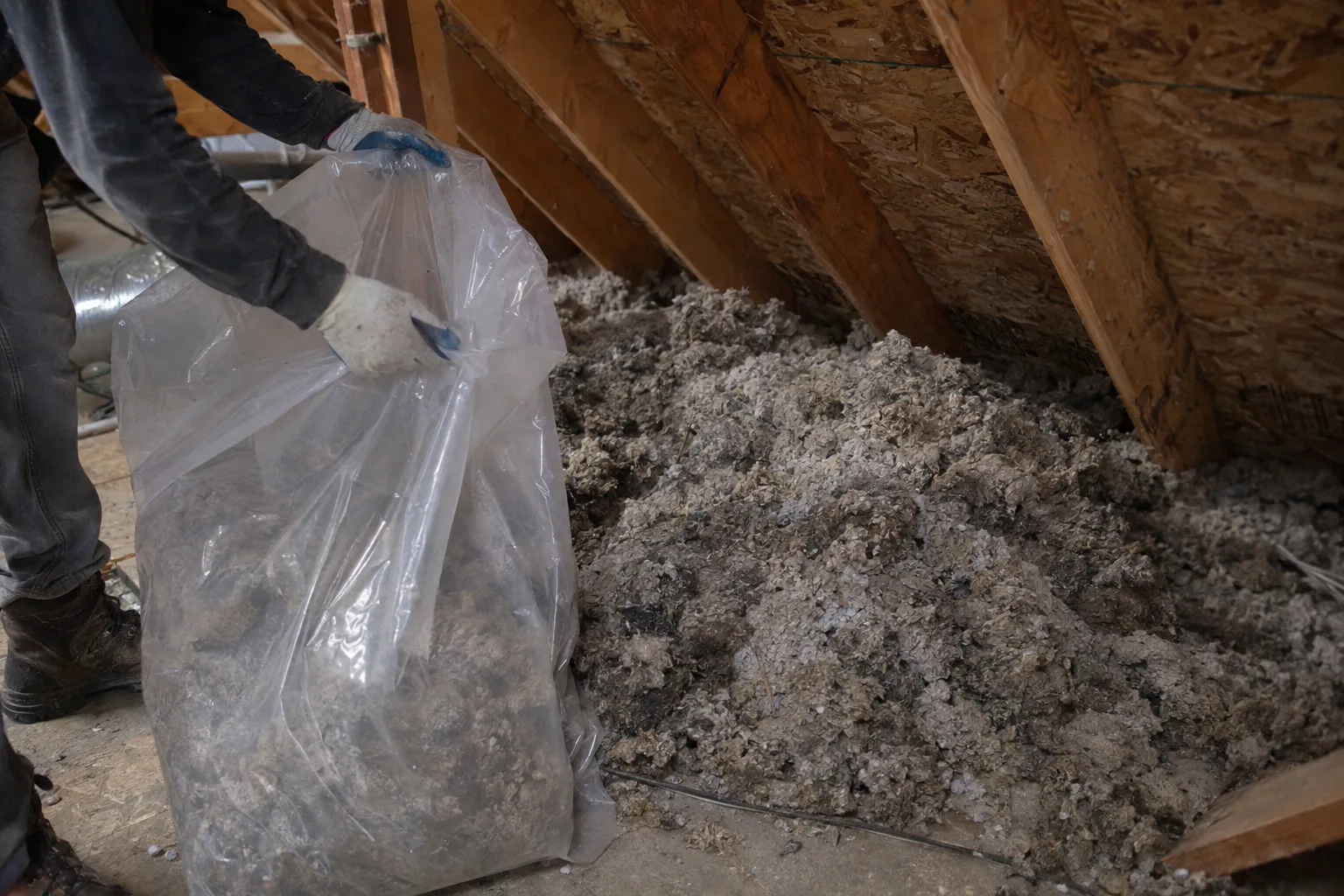
A homeowner in Tarzana called Rodent R Us after an HVAC technician flagged contamination during a routine maintenance visit. The homeowner had the attic access point sealed three months earlier. No one had gone back up. The technician found surface droppings across approximately 60 percent of the attic floor. The insulation beneath the most active zone was visibly discolored.
The homeowner had no idea. The scratching had stopped after the original treatment. They assumed that meant everything was resolved.
What the crew walks through before every cleanup job is this: the absence of active rodent signs doesn't tell you anything about the contamination that's already there. Those are two separate conditions. A property can be rodent-free for months and still have an attic that requires full biohazard remediation. The two jobs don't overlap, they follow each other.
The HVAC technician's find is more common than most homeowners expect. It's rarely discovered by the homeowner alone, because there's no reason to go back up after the rodents are gone. That's exactly why Rodent R Us connects cleanup to the exclusion work, so the attic gets assessed when someone who knows what to look for is already there.
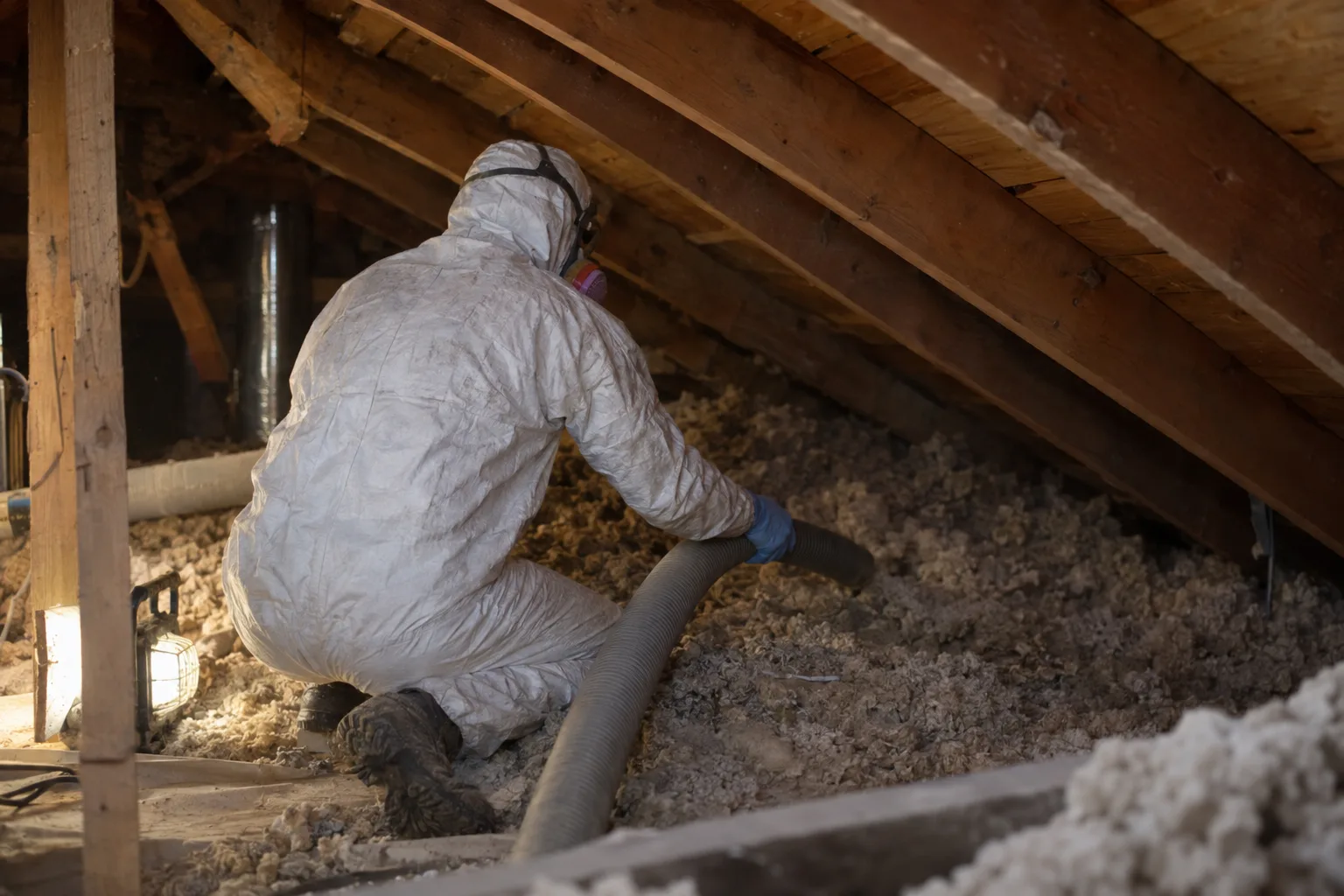
HEPA vacuuming, high-efficiency particulate air removal, is the correct method for dry rodent waste because it captures particles before they enter breathable air.
Here's the practical question we hear most often: why does professional cleanup matter if the rodents are already gone?
The answer is in how dried rodent material behaves when disturbed. Sweeping, brushing, or using a standard vacuum on dry droppings suspends fine particles in the air. Hantavirus, a respiratory illness transmitted by inhaling particles from dried rodent droppings, documented in California deer mice and a recognized public health concern in the region, is transmitted exactly this way. So is leptospirosis, a bacterial infection carried in rodent urine that remains viable in contaminated soil and organic material well after the animal is gone.
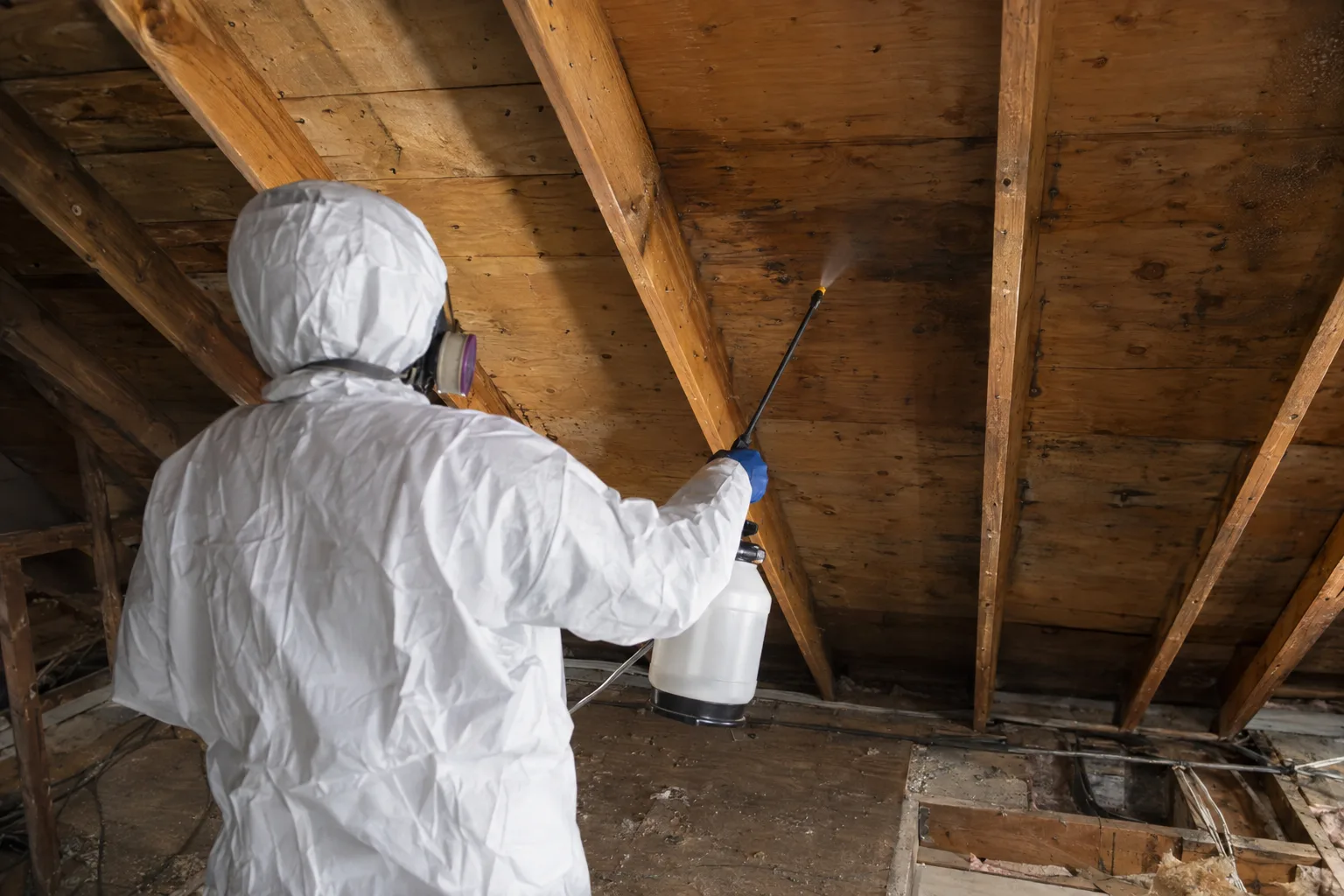
The cleanup sequence matters because containment has to happen before any surface treatment can be effective. HEPA vacuuming first. Then EPA-registered disinfectant, a cleaning agent approved by the Environmental Protection Agency for pathogen reduction, applied at the correct dwell time to the affected surface. Not the other way around.
We don't sweep and spray. The material has to come out first.
Every cleanup job follows the same containment-first sequence, matched to the contamination level found, not applied uniformly regardless of scope.
Our crew arrives in full personal protective equipment for every rodent dropping cleanup job. That's not optional on this type of work. It's the baseline.
We don't scale down the process for smaller jobs. A concentrated contamination in a tight crawl space can present equal or greater risk than a spread contamination across a larger attic.
Cleanup and insulation assessment happen in the same visit, because the insulation condition determines the next step.
Before any material is removed, the crew conducts an insulation assessment, the evaluation of attic insulation following rodent contamination that determines whether material can be sanitized in place or requires full removal and replacement. This finding shapes the scope of the cleanup.
Insulation that has absorbed significant urine, shows visible staining across multiple zones, or has been structurally disturbed by nesting activity typically cannot be sanitized in place. It needs to come out. Insulation with surface contamination only, droppings resting on top of an otherwise intact layer, may be a candidate for HEPA removal followed by disinfectant treatment.
We tell you which condition you have before any work begins.
HEPA vacuuming runs across every affected surface, starting from the furthest point from the access opening and working toward it. This prevents disturbed material from being tracked across already-cleaned areas.
Urine trail locations are treated with EPA-registered disinfectant held at dwell time. The crew does not move to surface disinfection until vacuuming is complete.
You receive a written summary of what was found, what was treated, and the insulation assessment result.
If replacement is indicated, that finding is documented with specifics, affected zone, estimated square footage, and observed contamination type, so you have the information needed to plan the next step.
Rodent R Us reaches Los Angeles properties across the San Fernando Valley from its Tarzana base.
From 5336 Mecca Ave in Tarzana, the crew covers cleanup jobs throughout the region. We regularly serve older attic spaces in Reseda, Canoga Park, Van Nuys, and Encino, where roof rat colonies have had the longest undisturbed presence in the area's housing stock. Crawl space cleanup across Woodland Hills, West Hills, and Calabasas is part of our standard service area.
Dried droppings and urine trails stay contaminated until something disturbs them. Sweeping or standard vacuuming suspends fine particles into breathable air, which is exactly how hantavirus is transmitted. HEPA vacuuming captures the material before it becomes airborne, followed by EPA-registered disinfectant. Removal has to happen first.
Two main concerns. Hantavirus is a respiratory illness transmitted by inhaling particles from dried rodent droppings, a recognized public health concern in California. Leptospirosis is a bacterial infection carried in rodent urine that stays viable in contaminated material well after the animal is gone.
Yes. Before any material is removed, the crew evaluates whether the insulation can be sanitized in place or requires full removal and replacement. Insulation with heavy urine absorption or nesting disturbance typically needs to come out. Surface contamination only may be treatable with HEPA removal and disinfectant. We tell you which condition you have before work begins.
Urine trails are the dried residue left along rodent travel paths. They emit a persistent ammonia odor and carry pathogen risk, so they are treated as a separate step. Unlike surface droppings, they require disinfectant penetration held at dwell time, not just surface contact.
A written summary of what was found, what was treated, and the insulation assessment result. If replacement is indicated, the finding is documented with specifics, including the affected zone, estimated square footage, and observed contamination type, so you can plan the next step.
The cleanup and the insulation assessment happen together, one crew, one visit, one written report. Contamination that has already settled into an attic doesn't improve on its own. If rodents have been active in your Los Angeles property and the space hasn't been cleaned since removal, the droppings and urine trails are still there.
Ready to Get Started? Contact our team today for a free consultation.