
Garage entry gaps and yard harborage addressed in one visit.
Roll-up door gaps, side door thresholds, and utility penetrations, sealed together.
One visit, both zones
The garage and the yard are the same problem. We inspect and seal both in a single scheduled visit, with one written scope.
Most homeowners check the attic, the kitchen, and the crawl space before they check the garage.
The garage sits between the yard and the house. It seems obvious in hindsight. But because it feels like a utility space rather than living space, it rarely gets treated as a priority entry zone, until evidence shows up there.
Finding droppings in the garage usually means a rodent has already passed through it. The garage was not the destination. It was the path.
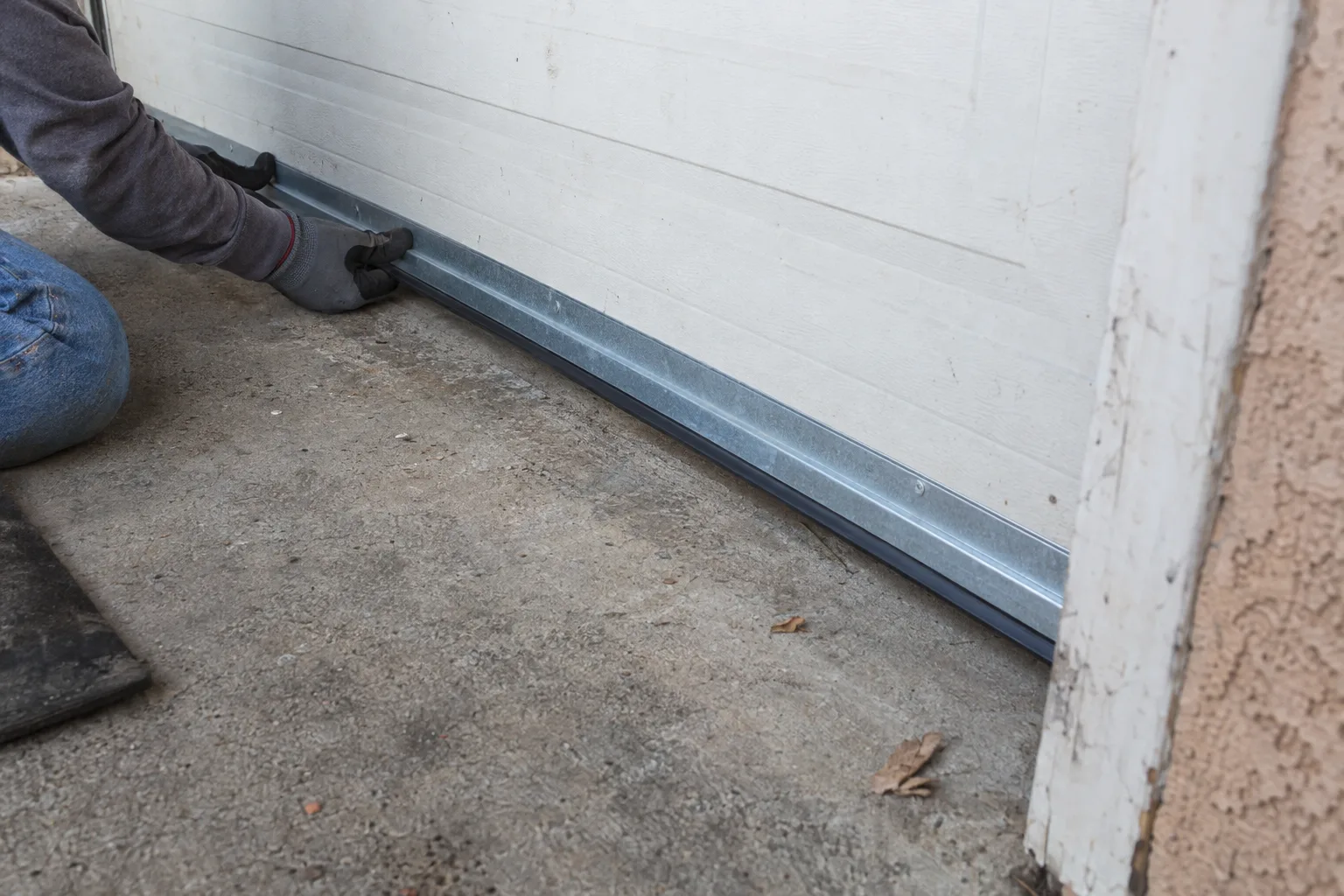
A roll-up door's bottom seal, the rubber or vinyl sweep along the base of the door, deteriorates with UV exposure and regular use. Los Angeles gets more UV exposure than almost any major American city. A seal that looked fine two years ago may now have a quarter-inch gap at one or both ends. A mouse needs less than a dime's width. A juvenile rat needs slightly more.
The side door is often worse. Most garage side doors in homes built before 1985 have no threshold sweep, a door-bottom seal that closes the gap between the door and the floor, at all. The gap is just open.
Utility penetrations, the points where gas lines, electrical conduit, and water supply lines pass through the garage wall, are almost never sealed at original construction. They are drilled to fit the pipe and left open around the edge.
A worn bottom seal opens quarter-inch gaps at the ends after years of LA sun.
Pre-1985 side doors often have no sweep at all, leaving the gap wide open.
Gas, electrical, and water lines drilled to fit, left open around the edge.
Three entry paths.
One small structure. All three are addressable in a single visit.
Los Angeles yards create rodent pressure that does not exist in most other American cities.
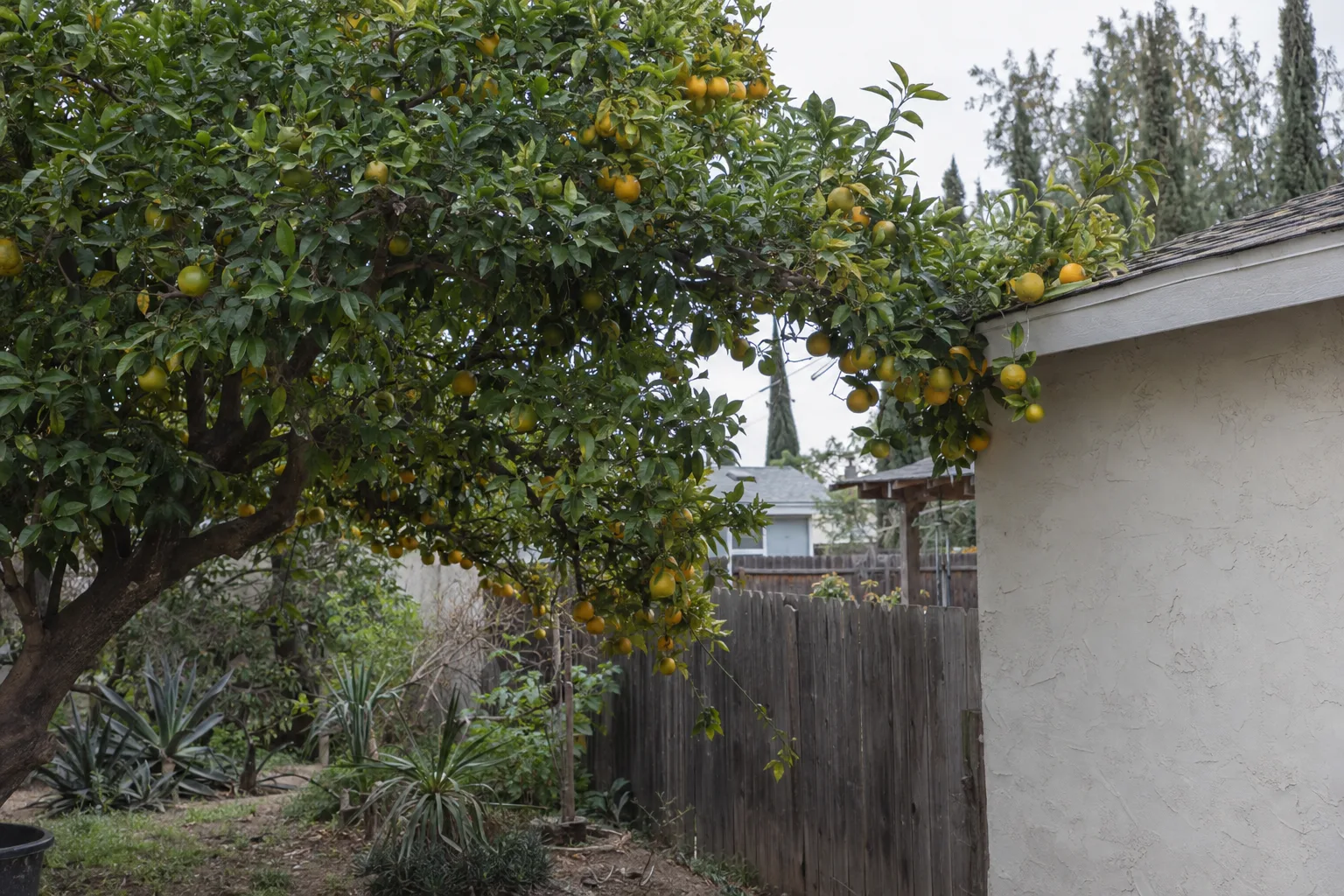
This is specific to what LA landscaping actually looks like and what roof rats (Rattus rattus, an agile climber that enters structures from above rather than below) actually do with it.
The distance between a fruit-bearing tree and the garage structure is one of the most common pressure factors we document in the 91356, 91316, and 91364 zip codes. A lemon tree with branches that overhang a fence line gives a roof rat a direct travel path toward the building. An avocado tree next to the garage wall does the same thing. The fruit is the attractant. The branch is the road.
Ivy planted against the foundation creates exterior harborage, any outside condition that shelters, feeds, or provides nesting opportunity for rodents. Once a rodent has a concealed route from the street to the wall, it will probe that wall repeatedly for an opening.
Compost bins placed near the garage add a food source. Wood piles stored against the exterior wall add cover. Neither condition is unusual in an LA residential yard. Together, they keep the garage wall under constant rodent pressure regardless of what has been sealed inside.
Sealing the door gap without addressing what draws rodents to that wall leaves half the problem in place.
A property in Tarzana, a 1968 ranch-style home with an attached two-car garage. The homeowner had found droppings near the water heater and assumed the rodents were living in the garage. Reasonable assumption.
Within fifteen minutes of starting the inspection we found three things. The garage door bottom seal had a visible gap on the right side, about three-eighths of an inch, enough for a juvenile roof rat to pass through. The side entry door had no threshold sweep and a gap wide enough to slide a pencil under. The electrical conduit coming through the back wall had about a half-inch of open space around it where it entered from outside.
All three gaps were on the same wall, the wall facing the backyard. That yard had a mature orange tree about eight feet from the garage exterior and a row of Italian cypress shrubs planted directly against the foundation. Dense low plantings like these create concealed movement corridors directly adjacent to a building. The rodents were not living in the garage. They were using it as a staging zone on the way to the wall connecting to the house interior.
We sealed all three entry points, documented the exterior harborage conditions, and included a trimming recommendation for the citrus branches closest to the fence line. The homeowner had never connected the orange tree to the rodent problem. That is the most common pattern on garage calls, not a failure to act, but a gap in information.
Sealing the door gap without addressing the yard means rodent pressure stays against the wall.
We treat garage entry and perimeter harborage as a single zone. The inspection covers both in the same visit. The scope document we produce maps the garage entry points alongside the exterior conditions feeding pressure toward them.
A sealed door gap is not the end of the problem if a fruit tree still provides a travel route to the wall and dense shrubs still provide concealed cover along the foundation. Rodents will probe a sealed gap repeatedly. They will find a second opening the first one was distracting from.
A completed job means two things: the physical entry points are sealed with materials rated for sustained gnaw pressure, and the exterior conditions keeping pressure constant against the building are documented with a plan to address them.
No second appointment needed for the perimeter assessment. One crew, one visit, both zones.
Every physical gap and every exterior harborage condition, in one structured walkthrough.
Everything found is documented. You receive a written scope before any sealing work begins.
Every gap type gets the material rated for that specific opening, not a single product applied everywhere.
The inspection walk produces a gap-by-gap map of the garage exterior. We measure each opening before material is selected. A quarter-inch gap on a threshold and a half-inch gap around a conduit penetration are not the same problem and do not get the same solution.
Bottom seal replacement uses a commercial-grade vinyl or rubber sweep rated for sustained contact and UV exposure.
Threshold sweeps on side entry doors are installed with a continuous seal across the full door width. Any gap at the hinge or latch side is addressed separately.
Utility penetrations are filled with gnaw-resistant material, hardware cloth, copper mesh, or Xcluder fabric depending on gap size and location, then sealed with an appropriate capping compound. Foam alone is not used on any penetration accessible to rodents.
Exterior harborage is addressed through documented recommendations, with trimming guidance specific to the tree species and branch position, or a recommended relocation distance for wood and compost storage.
After all gaps are sealed, the crew walks the full garage perimeter again. Every sealed point is checked for continuity. The interior door between the garage and the house is tested for threshold clearance. A written completion record lists every entry point sealed, the material used, and the date of service.
Yes. We treat garage entry and perimeter harborage as a single zone. One crew covers both in the same scheduled visit, with a written scope mapping the entry points alongside the exterior conditions feeding pressure toward them. No second appointment is needed.
The garage sits between the yard and the house, and it feels like a utility space rather than living space, so it rarely gets treated as a priority entry zone. Worn roll-up door seals, missing side door threshold sweeps, and unsealed utility penetrations create three common entry paths on one small structure.
Roof rats are agile climbers. A lemon or avocado tree with branches overhanging a fence line or wall gives them a direct travel path toward the building. The fruit is the attractant and the branch is the road. We record branch distances and provide trimming guidance specific to the species and branch position.
Utility penetrations are filled with gnaw-resistant material, hardware cloth, copper mesh, or Xcluder fabric depending on gap size and location, then sealed with an appropriate capping compound. Foam alone is not used on any penetration accessible to rodents; it does not hold under sustained gnaw pressure.
We schedule same-week inspections across Los Angeles. Call (323) 805-0173 or email in**@*******us.com, tell us what you found and where, and we will confirm what the assessment covers before the crew arrives.
We work along the Ventura Boulevard corridor and in the hillside neighborhoods adjacent to Topanga Canyon, where mature citrus plantings, aging garage construction, and canyon-edge wildlife pressure combine into the exact conditions this page describes.
If you have found evidence in the garage, droppings, gnaw marks, or a gap you have been meaning to address, tell us what you found and where. We will confirm what the assessment covers before the crew arrives.
Rodent R Us · 5336 Mecca Ave, Tarzana, CA 91356 · in**@*******us.com