
We document entry points and prior infestation evidence your home inspector will not check. A written report before your due diligence window closes.
A written report
Location-mapped findings you can use in negotiation, not a verbal opinion at the curb.
Location-mapped findings you can reference in negotiation.
Dispatched from Tarzana, inside the Valley neighborhoods where these conditions concentrate.
Findings delivered inside your escrow window so they can inform negotiation.
Two different documents, two different scopes.
A licensed home inspector checks the visible structure. The roof condition. The electrical panel. The HVAC system. That is what a general home inspection is designed to do, and it does it well.
Rodent activity is outside that scope.
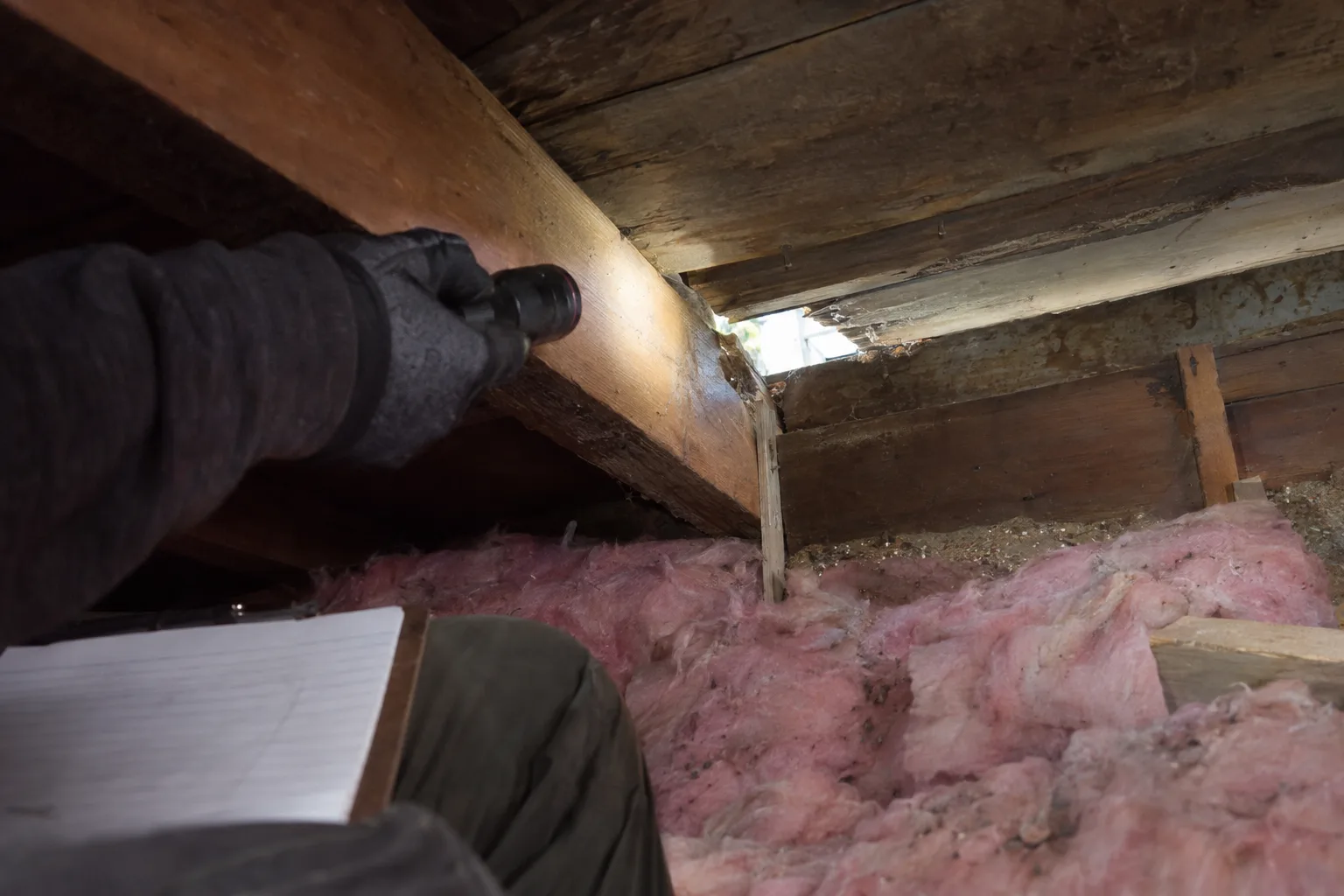
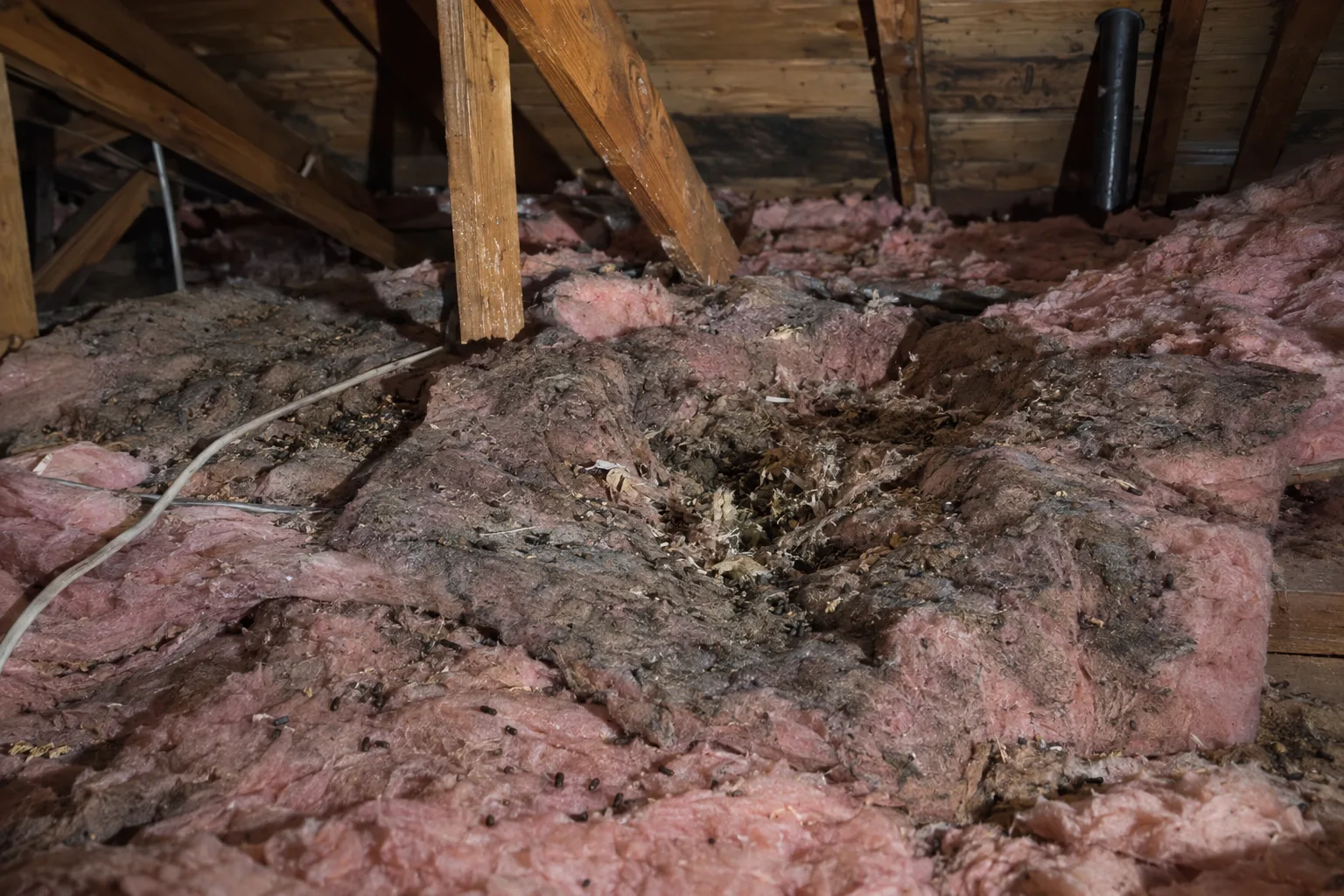
Grease trails along attic rafters. Nesting material compressed into insulation. Gnaw marks on a soffit panel from the outside. An open bird block under Spanish tile that has been accessible for years. None of those findings appear on a standard home inspection report, because the inspector was not specifically looking for them.
A pre-purchase rodent inspection, a standalone assessment scoped specifically to identify rodent entry points, prior infestation evidence, and attic or crawl space contamination, fills that gap. The buyer who commissions one closes with a complete picture. The buyer who does not may find that gap in the first month of ownership.
Los Angeles homes carry specific rodent vulnerabilities that general inspections were never designed to catch.
A large share of homes in the San Fernando Valley were built between the 1950s and 1970s. Original foundation vent screens. Aging fascia boards. Spanish tile rooflines with open bird blocks, the small gaps under each tile where roof rats enter from above.
Rattus rattus, the roof rat, is the dominant rodent species in Los Angeles. It travels utility lines and citrus tree branches. It enters from the roofline, not the ground. A buyer purchasing a home with a mature orange tree in the backyard and a tile roof overhead is purchasing a property with two of the most significant roof rat attractants in Southern California.
Our inspection crew dispatches from Tarzana, inside the Valley neighborhoods where these conditions are most concentrated, and reaches properties throughout Los Angeles within the typical due diligence window. Your escrow period does not need to close before findings are in hand.
What a buyer finds in the first thirty days of ownership tells the story a pre-purchase inspection would have told before closing.
We have walked attics in homes that sold three weeks earlier. The general inspection report was clean, or as clean as a standard report gets. No structural concerns flagged. No roof damage noted. The buyer closed without a separate rodent assessment. They called us after move-in.
What we found was not hidden. It was outside the scope of what a general inspector looks for. Old nesting material packed into the corner of the attic where the rafter meets the top plate. A section of compromised insulation with urine staining visible under UV light. An open bird block on the south-facing roofline, accessible from the citrus tree in the side yard.
None of that was the inspector's failure. It is a scope issue. General inspections and rodent inspections answer different questions. A buyer who commissions both walks into closing knowing exactly what the property contains. A buyer who commissions only one walks in with half the picture.
The cost of the pre-purchase inspection is a fraction of the cost of post-close attic remediation, and the written report can be used directly in negotiation if findings warrant it.
15+
Field technicians
100%
Direct employees
Written
Report every job
Same-week
Scheduling
Specific, location-mapped, and ready for use in negotiation or post-close planning.
A verbal summary at the end of a walkthrough is not a deliverable. It cannot be presented to a seller. It cannot be referenced in an inspection contingency, the clause in a purchase agreement that allows a buyer to negotiate repairs or withdraw based on inspection findings. A verbal summary disappears the moment the technician drives away.
The written inspection deliverable is what makes a pre-purchase rodent inspection worth commissioning. It names what was found. It names where. It documents whether evidence is active or historic. And it gives the buyer a specific, verifiable record before any post-close decision is required.
Here is how that matters in practice: if the report identifies prior infestation evidence, old nesting material, sealed patches indicating prior repair, or attic contamination, the buyer has documentation. That documentation can be used within the inspection contingency window to negotiate remediation credits or require seller disclosure.
Every zone a roof rat or crawl space rodent would use to access the structure.
Every accessible eave, bird block gap, and fascia condition along the full roofline perimeter.
Insulation condition, nesting evidence, droppings volume and distribution, urine staining assessed under UV light where applicable, and rafter damage.
Foundation vents, pipe penetrations, and block wall voids checked for below-grade entry evidence.
Entry points at ground and mid-wall elevation, utility penetrations, and harborage conditions in adjacent landscaping.
Sealed or patched gaps that suggest past rodent activity, regardless of current active signs.
Active evidence and prior infestation evidence are documented separately. You deserve to know whether a property has a current condition, a historical one, or structural vulnerability with no current signs.
Formatted to be actionable within the due diligence window, not just readable.
The crew assesses the full property exterior before entering the attic or crawl space. Every confirmed entry point is photographed and given a specific location designation. Each finding has a named location.
Findings are organized by zone: roofline, attic interior, crawl space, perimeter. Active evidence and prior evidence are flagged separately. The report notes whether each finding is an immediate condition or a structural vulnerability.
Produced after the inspection is complete, and before your due diligence window closes if scheduling is coordinated in advance. Structured so you can reference it in negotiation, share it with your agent, or plan post-close remediation.
You do not receive a verbal walkthrough and a follow-up promise. The report is the job.
Not to this depth. A general inspection covers visible structure, roof condition, electrical, and HVAC. Grease trails on rafters, nesting material in insulation, gnaw marks on soffit panels, and open bird blocks fall outside that scope. It is not a failure on the inspector's part, it is a different document answering a different question.
That is what it is built for. Findings are location-mapped and separated into active versus prior evidence, so the report can be referenced within your inspection contingency window to negotiate remediation credits or request seller disclosure. A verbal summary cannot do any of that.
Yes, if scheduling is coordinated in advance. Tell us the property address and your inspection contingency deadline when you call, and we will confirm availability against that date before booking. Our crew reaches properties across LA within a typical escrow period.
That gets documented as its own category. Prior infestation evidence, sealed patches indicating past repair, and attic contamination are recorded separately from active signs. Knowing a property has a history, or a structural vulnerability with no current activity, is information worth having before you close.
No, as long as property access is arranged with the listing agent. The report is the deliverable either way. Buyers who can attend often find it useful to see the roofline and attic conditions in person, but nothing in the findings depends on you being there.
We conduct pre-purchase rodent inspections across Los Angeles from our Tarzana dispatch location, serving buyers throughout the San Fernando Valley and the broader LA metro. If your closing timeline is active, contact us to confirm availability within your escrow window.
Schedule early enough in your escrow period that findings can inform negotiation if warranted. Tell us the property address and your inspection contingency deadline, and we will confirm availability and deliver written findings before your window closes.
Rodent R Us · 5336 Mecca Ave, Tarzana, CA 91356 · in**@*******us.com