
Warning Signs You Have a Rodent Problem in Your Los Angeles Home
Learn to read the physical evidence of rodent activity, zone by zone, so you know exactly what you are dealing with before you call anyone.
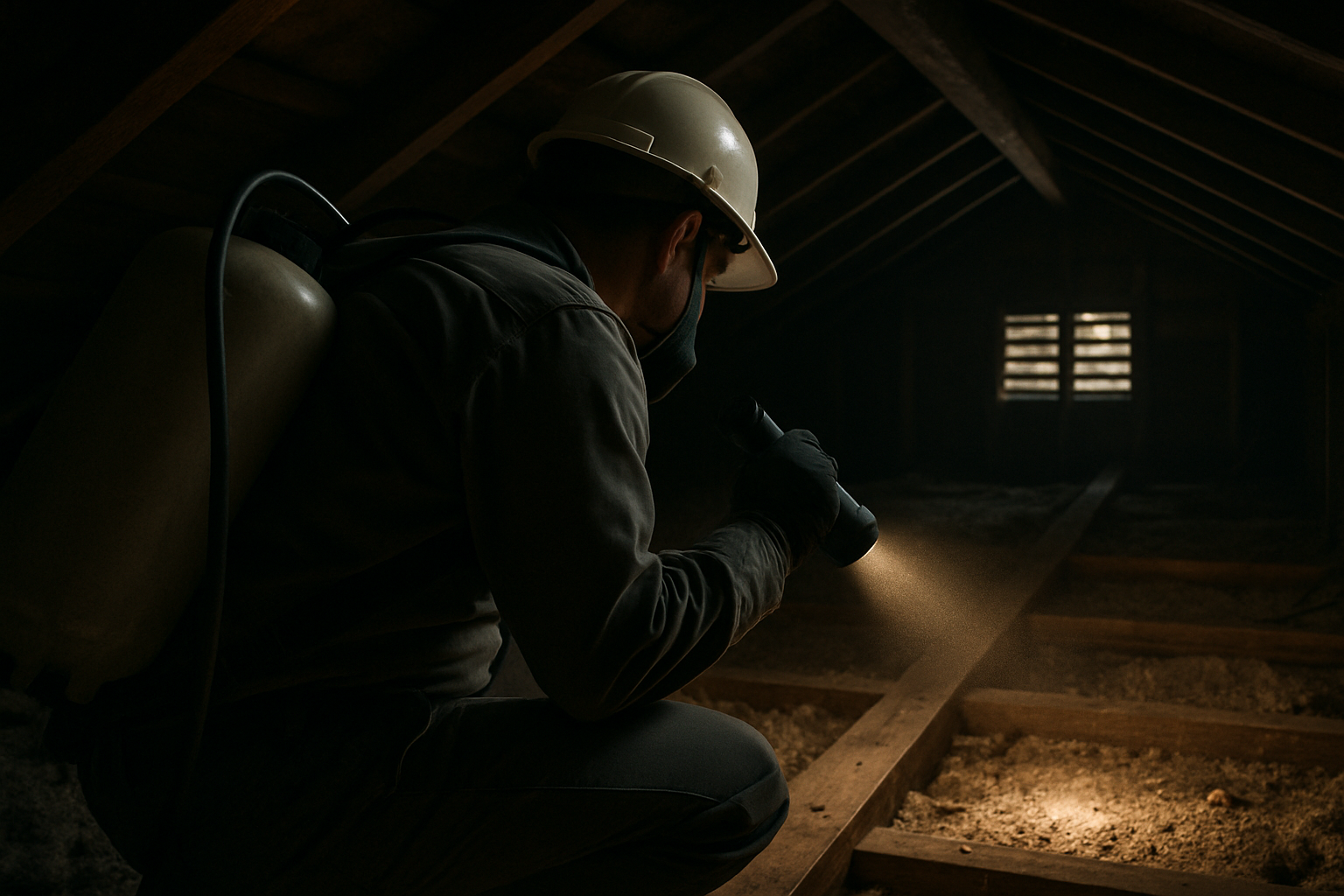
Written zone-by-zone assessment on every inspection
Warning Signs You Have a Rodent Problem in Your Los Angeles Home
Serving Greater Los Angeles from our Tarzana base
Identify Rodent Activity by Zone Before You Call Anyone
Physical evidence of rodent activity tells you exactly what you're dealing with, if you know where to look.
Dropping size, sound timing, grease trails, and yard evidence each carry specific information. A small pile of droppings in a pantry corner means something different than scratching above the ceiling at 1 AM. This page walks you through each zone in your Los Angeles home. Read what you find against what each sign indicates.
The Evidence You Found Tells You More Than You Think, Here Is How to Read It
Los Angeles homes produce a specific evidence profile that most general guides don't account for.
Here's what most homeowners don't realize about rodent signs in LA: the dominant species here isn't the ground-burrowing Norway rat most national guides describe. It's Rattus rattus, the roof rat. An aerial traveler. It climbs citrus trees, runs telephone lines, and drops onto rooftops. That changes where evidence appears and what it looks like.
Grease trails, dark smear marks left along walls by repeated rodent contact, caused by oil and debris transferring from a rodent's coat, show up along the attic floor perimeter and behind appliances in LA homes far more often than at baseboards near exterior walls.
A homeowner in the San Fernando Valley who finds evidence at ceiling height is almost certainly looking at roof rat activity. That's a different inspection scope than a Norway rat pushing up through a foundation vent. The zone where you find signs is the first clue toward understanding what species you're dealing with and how large the activity is.

Check Every Zone in Your Home Using This LA-Specific Evidence Guide
Each zone in your home produces a different type of rodent evidence, here is what each one means.

Kitchen and Pantry
Start behind the refrigerator and under the sink. Droppings here are the most common first sign homeowners find in Los Angeles.
Dropping size identification, the practice of distinguishing between rat and mouse feces by length and shape, is your first diagnostic tool. Norway rat droppings are capsule-shaped, roughly three-quarters of an inch long. Roof rat droppings are slightly smaller with pointed ends. House mouse droppings are small, dark, and tapered at both ends, roughly a quarter-inch.
Droppings on a pantry shelf differ from droppings on the floor near a wall base. Shelf placement suggests active climbing, consistent with roof rats. Floor-level droppings near a wall gap suggest a mouse or a Norway rat entering at ground level.
Gnaw mark evidence on cabinet corners or food packaging tells you the population has moved past a single exploratory animal. Fresh gnaw marks are light-colored with rough edges. Dark, smooth marks are older. Active gnawing means a current population, not a past one.
Walls and Ceiling Sounds
Scratching sound timing, when movement sounds occur within a structure, is a strong species indicator specific to Los Angeles.
Roof rats are most active from dusk through early morning. Sounds between 10 PM and 3 AM, coming from directly above the ceiling, are consistent with attic nesting. Movement sounds within the walls, not above, suggest a rodent traveling between floors toward a food source.
A single sound heard once is harder to interpret. Repeated sounds in the same location on consecutive nights confirm a travel path. Two different locations producing sound on the same night suggest an established population with multiple routes.
Attic Space
The attic is the primary nesting zone for roof rats in Southern California. In homes across Encino, Tarzana, and Woodland Hills, particularly those built in the 1950s through 1970s, open bird blocks under Spanish tile rooflines give roof rats direct entry without passing through any sealed zone.
Rodent evidence in attics often includes flattened insulation forming runways, concentrated dropping deposits, and nesting material pulled from insulation batts. Urine staining, dried rodent urine that fluoresces under ultraviolet light, is used during professional inspections to map travel routes not visible under standard lighting.
If your attic access panel shows a visible grease trail around its edges, you have a regularly used route between the attic and the living area below.
Yard and Exterior
This is the evidence most Los Angeles homeowners miss entirely. A fruit tree activity indicator, partially eaten citrus, avocado, or fig found on the ground with tooth marks, is a roof rat feeding pattern specific to LA yards.
Partially eaten fruit with clean, gnawed edges and no insect damage is roof rat activity. Fruit with bite marks directly on the branch, above ground level, confirms the animal is feeding aerially. This is often the first external sign that appears before any interior evidence.
Look also at where utility lines attach to your home's exterior. A worn or greasy spot where a cable meets the fascia indicates a regularly used roof entry bridge.

What You Can Expect From a Rodent R Us Assessment
A professional inspection turns the evidence you found into a written, location-mapped picture of what's actually happening.
Reading one sign tells you something. Reading all signs together, by zone, by timing, by age, by concentration, tells you the scope.
A pile of droppings is evidence. Twenty piles distributed across three zones, with a urine trail connecting the attic to the kitchen wall, is a population assessment. That's the difference between "I might have a rodent" and "here's the extent of it."
At Rodent R Us, every inspection produces a written assessment naming what was found, where, and what it indicates about the scope of work. You don't leave the appointment with a verbal summary. You have a document.
That matters when you're deciding what kind of service you need. It also matters if you're a landlord responding to a tenant complaint or a buyer completing due diligence before closing.
How We Document Signs, Entry Points, and Activity Level
Every rodent sign we find gets logged by zone, by type, and by age, not summarized at the door.
Our inspection process for a Los Angeles property covers:
- ✓ Kitchen and living zones, droppings logged by size and placement, gnaw marks assessed for age, grease trail paths traced from appliance gaps
- ✓ Wall and ceiling zones, sound reports cross-referenced against visible evidence; entry points above baseboard height assessed for roof rat access
- ✓ Attic space, insulation assessed for runway flattening and dropping concentration; UV light used to map urine trails and identify contamination extent beyond visible droppings
- ✓ Roofline and exterior, bird blocks, soffit conditions, fascia gaps, and utility line attachment points checked for aerial entry
- ✓ Yard and perimeter, fruit tree activity assessed, harborage zones identified, travel paths between exterior vegetation and structure mapped
Rodent activity level assessment, an estimate of population size and infestation duration based on the volume, distribution, and age of physical evidence, is the final output. Light evidence in one area indicates early-stage activity. Widespread evidence across multiple zones indicates an established population.
You receive a written version of every zone finding before we recommend any specific scope of work.
What Shapes the Outcome When You Act on Rodent Evidence
Four variables determine whether a rodent problem resolves or continues, all start with the evidence.
Species identification
Roof rats and Norway rats require different exclusion strategies. Roof rats enter from above. Norway rats push from below. Treating the wrong elevation is a common reason a problem continues after sealing work. The evidence you find, and where, tells you which species you're dealing with before anyone sets foot on a roof.
Evidence age and distribution
Fresh droppings indicate active current use. Old, dark droppings in a single location may reflect past activity that has already moved or ended. A zone-by-zone assessment tells you which is which, and prevents scope expansion on a property where activity has already shifted.
Entry point count
A single confirmed entry produces a different scope than eight spread across roofline, foundation, and garage. Knowing the number before committing to any service protects you from underestimating a serious infestation and from paying for a scope that doesn't match the situation.
Time from first sign to inspection
Rodent populations in Los Angeles grow year-round. There is no cold season that slows things down. A two-week gap between first evidence and a professional assessment gives an early-stage problem time to establish further.
Rodent R Us serves Los Angeles from its Tarzana base
Reaching residential and commercial properties across the region. We receive inspection calls from across the San Fernando Valley, including Encino, Woodland Hills, Reseda, Canoga Park, Sherman Oaks, Van Nuys, and West Hills. We also serve properties throughout the broader Los Angeles metro. Call (323) 805-0173 or email in**@*******us.com to confirm availability in your neighborhood.
Ready to Have Your Evidence Read by Someone Who Knows What It Means?
One inspection turns what you found into a written, zone-by-zone picture of what's actually happening in your home. Contact us today for a free consultation.
Call Rodent R Us at (323) 805-0173 or email in**@*******us.com to schedule your Los Angeles rodent inspection. Tell us where you found the signs and what zone they were in. We'll take it from there.