
California tenant and landlord rights on rodent infestations
What the law actually requires
A plain-language explanation of California Civil Code §1941 and §1942, for tenants and landlords both.
Legal disclaimer: This page is an educational resource. It does not constitute legal advice. For guidance specific to your situation, consult a licensed California attorney.
What California law actually requires when rodents are found in a rental
California law requires landlords to keep rental units free of rodent infestation, before and after a tenant complains.
This applies to every residential lease in the state. It does not matter whether the lease mentions rodents. It does not matter whether the tenant moved in before or after the problem started. California Civil Code §1941, the statute that requires landlords to deliver and maintain a habitable rental unit, lists a rodent-free property as a specific habitability condition. That obligation exists on day one.
Both tenants and landlords in Los Angeles frequently reach out with the same question from opposite sides: what exactly does the law require me to do? This page answers that question for both parties. The statutes are real. The timelines are real. The remedies are real. Neither side should learn these for the first time during a dispute.
Why this question matters specifically in Los Angeles
Los Angeles has one of the highest rental-unit concentrations in California, and a year-round rodent pressure that other cities do not face.
Most of the country deals with seasonal rodent activity. Rodents push indoors in the fall and ease off in spring. Los Angeles does not work that way. Rattus rattus, the roof rat, is active throughout the year here. It travels utility lines and citrus trees. It enters at roofline level, not the foundation. A tenant in Van Nuys or Reseda who hears scratching in January is not dealing with a seasonal anomaly. It is a persistent, year-round condition.
The LA Housing Department (LAHD), the city agency that handles habitability complaints, has received documented rodent complaint filings across the high-density rental corridors of North Hollywood, Van Nuys, and Canoga Park. These neighborhoods carry significant older housing stock built between the 1950s and 1970s. That era of construction has deteriorated foundation vents, aging pipe penetrations, and sun-damaged soffits. The buildings have gaps. Roof rats find them.
Rodent R Us serves rental properties across these corridors from its Tarzana location. That proximity means the crew understands the specific construction type and species behavior that drives habitability conditions here.
What §1941, §1942, and the warranty of habitability actually say
California law creates a clear legal framework, and most renters and landlords only know half of it.
Civil Code §1941, the landlord's core obligation
California Civil Code §1941 is the statute requiring California landlords to deliver and maintain rental units in a habitable condition. One of its specific habitability requirements is that the premises be free of rodent infestation. This obligation exists regardless of whether a tenant has complained.
That last part matters. A landlord who knows about a rodent condition and waits for a formal written complaint before acting is already behind the legal standard. The duty to maintain a habitable unit is ongoing, not triggered by notice.
What counts as a rodent condition under the statute? Courts have interpreted this broadly. Active droppings. Evidence of gnawing. Audible scratching in walls or ceilings. Direct sightings. Any of these conditions, if persistent and unaddressed, can constitute a §1941 violation.
Civil Code §1942, the tenant's remedies
California Civil Code §1942 is the companion statute establishing tenant remedies when a landlord fails to repair a habitability condition. Two remedies are available.
Repair-and-deduct: a tenant remedy under §1942 that allows a renter to hire a contractor to fix a habitability condition and deduct the cost from one month's rent. This remedy is available when the landlord has been notified and has not acted within a reasonable time. It can be used up to twice within any twelve-month period. The deduction is capped at one month's rent per use.
Vacate and terminate: the tenant may also choose to abandon the rental unit and terminate the lease without penalty, what California courts call constructive eviction. A severe, persistent rodent condition, unaddressed after notice, has been argued as a basis for constructive eviction in California courts.
The warranty of habitability
Every California residential lease includes what the law calls the warranty of habitability, the implied legal promise that the unit will remain safe and livable throughout the tenancy. A rodent infestation is a recognized breach of this warranty when the landlord is notified and fails to respond within a reasonable period. Tenants do not waive this warranty by signing any lease clause; courts have consistently voided lease language attempting to limit habitability obligations.
What "reasonable time to repair" means in practice
Here is where landlords most often get caught off guard. Reasonable time to repair is the legally ambiguous but practically important window between a tenant's notice of a habitability defect and the landlord's obligation to complete the repair. California courts have interpreted this as days to weeks, depending on severity. Rodent conditions are generally treated as urgent, not as minor repairs. A landlord who receives a written rodent complaint and schedules a treatment three weeks out may not meet the reasonable time standard.
The practical guidance: respond in writing immediately, document every step taken, and begin substantive corrective work within a few days of receiving notice.
Common scenarios, and how these rules play out
Real situations reveal how the law applies, often in ways neither party expected.
The tenant who finds droppings in the kitchen
A renter in a Reseda apartment finds rodent droppings on the kitchen counter two weeks after moving in. They notify the landlord by text. The landlord says they will "send someone." Three weeks pass. Nothing happens.
Under §1942, that tenant has already met the notice requirement. The landlord received notification. A reasonable repair period has passed without substantive action. At this point the tenant has two options: use repair-and-deduct, or escalate to LAHD by filing a habitability complaint. Filing with LAHD triggers an official inspection and can result in a notice of violation served on the property owner.
The landlord who responds immediately
A landlord in North Hollywood receives a written rodent complaint from a tenant. They call a rodent exclusion company within 48 hours. The company completes a property inspection, seals confirmed entry points, and provides a written service record documenting every opening addressed, the materials applied, and the date of service.
This landlord is in a strong position. Written documentation of a substantive structural response, not just a verbal assurance or a single trap placement, demonstrates that genuine corrective action was taken. If the tenant later files with LAHD, that documentation is the landlord's evidence that the habitability obligation was met.
The ongoing condition in a multi-unit building
A property manager oversees a twelve-unit building in Van Nuys. Multiple tenants in adjacent units report rodent signs over several months. Bait stations were placed, but no structural work was done. Rodent pressure continued.
Bait-only approaches without exclusion work do not resolve the underlying entry condition. Each new tenant complaint restarts the reasonable time clock. An unaddressed structural condition across multiple units creates compounding liability under §1941, and significantly increases the likelihood of an LAHD enforcement action.
What getting this right looks like in practice
Written documentation separates a genuine habitability response from an unverifiable verbal assurance.
Working across rental properties in Los Angeles's Valley communities, the landlords who end up in disputes are not always the ones who ignored a complaint. Many of them responded, they just could not prove it.
A verbal call to a pest company. A single trap placed in the attic. A tenant told "we are handling it." None of that produces a paper trail. When an LAHD inspector arrives or a tenant escalates, the landlord has no documented record that substantive work was done.
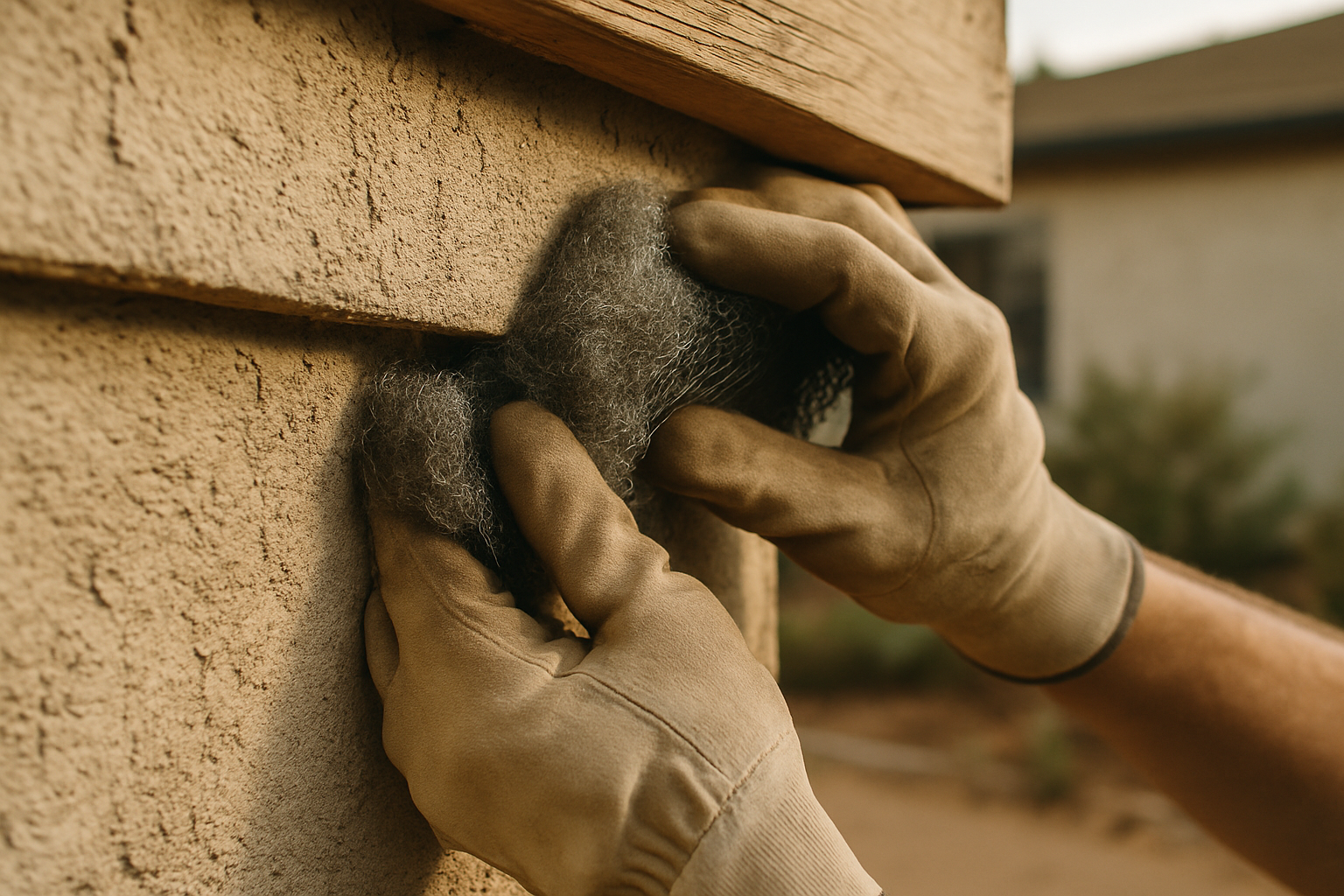
Rodent R Us provides written service documentation on every job completed at a rental property. That documentation identifies the entry points found, the specific materials applied to each opening, the locations sealed, and the date the work was completed. That is the kind of record that demonstrates a landlord actually addressed the structural condition that caused the rodent problem in the first place.
For tenants: a landlord who commissions and receives this type of documentation has taken a substantive, verifiable step. That matters for evaluating whether the habitability obligation has been met.
When to call a professional
A professional rodent exclusion service creates the physical repair and the written record at the same time.
For tenants, calling a professional makes sense when the landlord has been notified and has not responded with visible structural work. If you are considering repair-and-deduct under §1942, the contractor's invoice and service report become your documentation.
For landlords, the time to call is immediately after receiving a written rodent complaint, not after the tenant escalates, not after LAHD gets involved. The reasonable time standard under California law is measured in days to weeks for rodent conditions. Getting a professional on-site quickly, with written findings delivered afterward, is the difference between a resolved habitability issue and ongoing legal exposure.
A written exclusion record shows what was done, not just that something was done. That specificity is what holds up when a habitability dispute is reviewed.
Rental corridors we serve
Rodent R Us serves rental properties across Los Angeles from its Tarzana base, reaching the high-density corridors where LAHD complaint volume and California habitability disputes are most concentrated.
- Van Nuys
- North Hollywood
- Reseda
- Canoga Park
- Encino
- Woodland Hills
Legal disclaimer: The information on this page describes California law as it applies to rodent habitability conditions in general terms. It is not legal advice and does not create an attorney-client relationship. For guidance specific to your situation, as a tenant or a landlord, consult a licensed California attorney familiar with residential habitability law.
Read the law first. Then decide what action it requires.
If you are a landlord who received a written rodent complaint, the appropriate response involves a professional inspection, physical exclusion work, and written documentation of every step. Rodent R Us can complete all three.
Rodent R Us · 5336 Mecca Ave, Tarzana, CA 91356 · in**@*******us.com