
Every foundation vent, pipe gap, and block void sealed below grade.
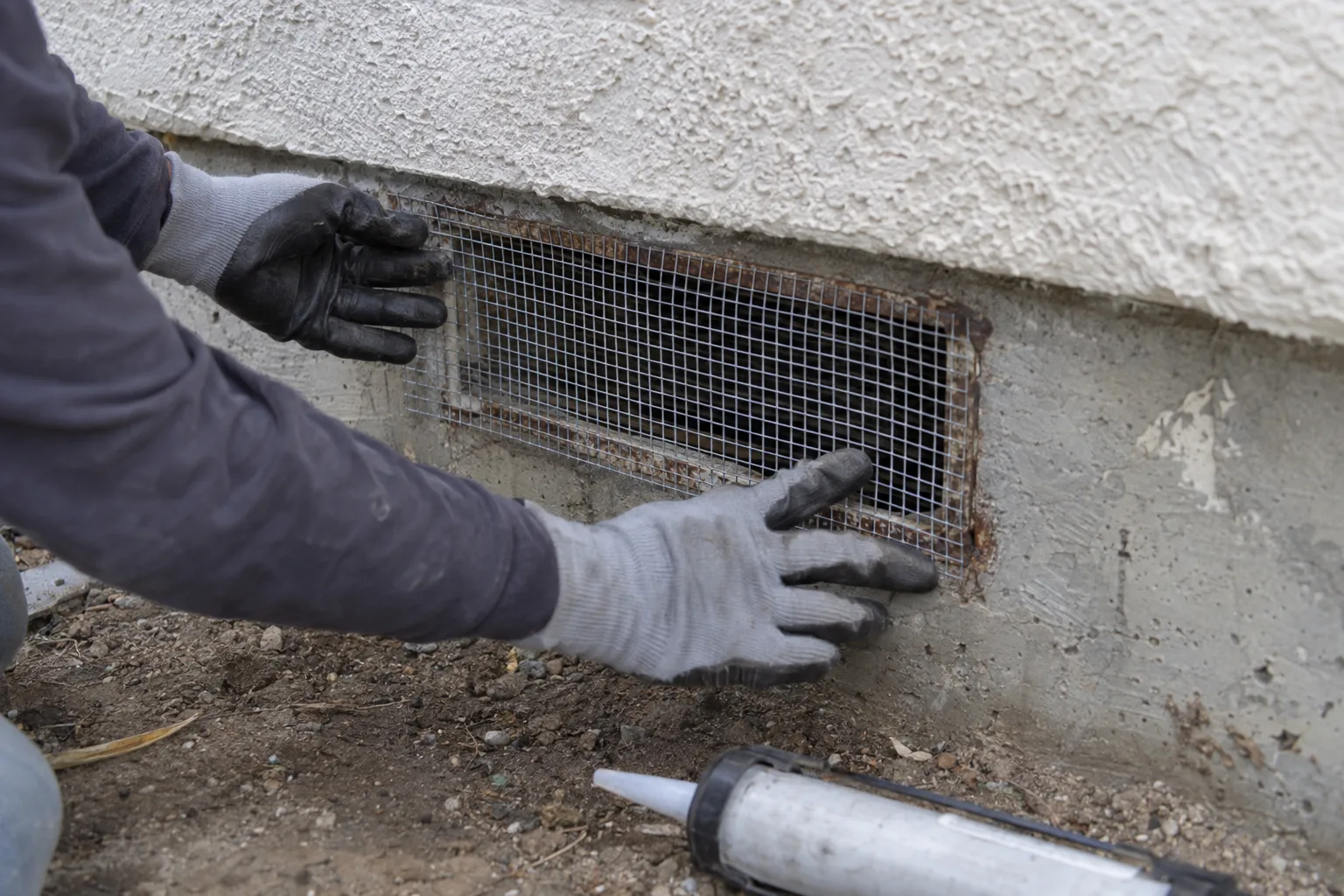
Photo-documented
We photograph each opening before any material goes in. Every opening, before and after. No guesswork.
Crawl space rodent sealing works differently than roofline exclusion, because the entry points are different animals entirely.
A crawl space is the unfinished, low-clearance space underneath the ground floor of your home. It stays cool, dark, and undisturbed year-round. Rodents find it attractive for exactly those reasons.
Below-grade openings, foundation vents, pipe sleeve gaps, and block wall voids sit at or near soil contact. Moisture, ground pressure, and decades of settling all work against them. Sealing materials that hold at roofline elevation can fail quickly in contact with soil and standing water.
Foundation rodent proofing in Los Angeles requires a separate inspection approach, separate material standards, and a separate documentation record. What works above does not always hold below.
The western San Fernando Valley is one of the densest concentrations of 1950s and 1960s construction in the country, and that era built in vulnerabilities that are still open today.
Tarzana, Reseda, Canoga Park, Van Nuys, and Encino were built out rapidly after World War II. The foundation vents on those homes were standard-issue galvanized mesh. That mesh had a service life. Most of it ran out years ago.
Here is what most homeowners do not realize about foundation vent failures: the mesh does not always fall out completely. It corrodes, pulls away from the frame at one corner, or develops a gap too small to see without getting down close. That gap, sometimes less than an inch, is wide enough for a juvenile roof rat or a house mouse.
Our crew travels from Tarzana across the western Valley every week. Post-war housing with aging crawl space infrastructure is the most common property type on the schedule. We know these homes. We know where the vent frames fail first.
1945
Era we specialize in
<1"
Gap a rat can enter
Western Valley
Dispatched weekly from Tarzana
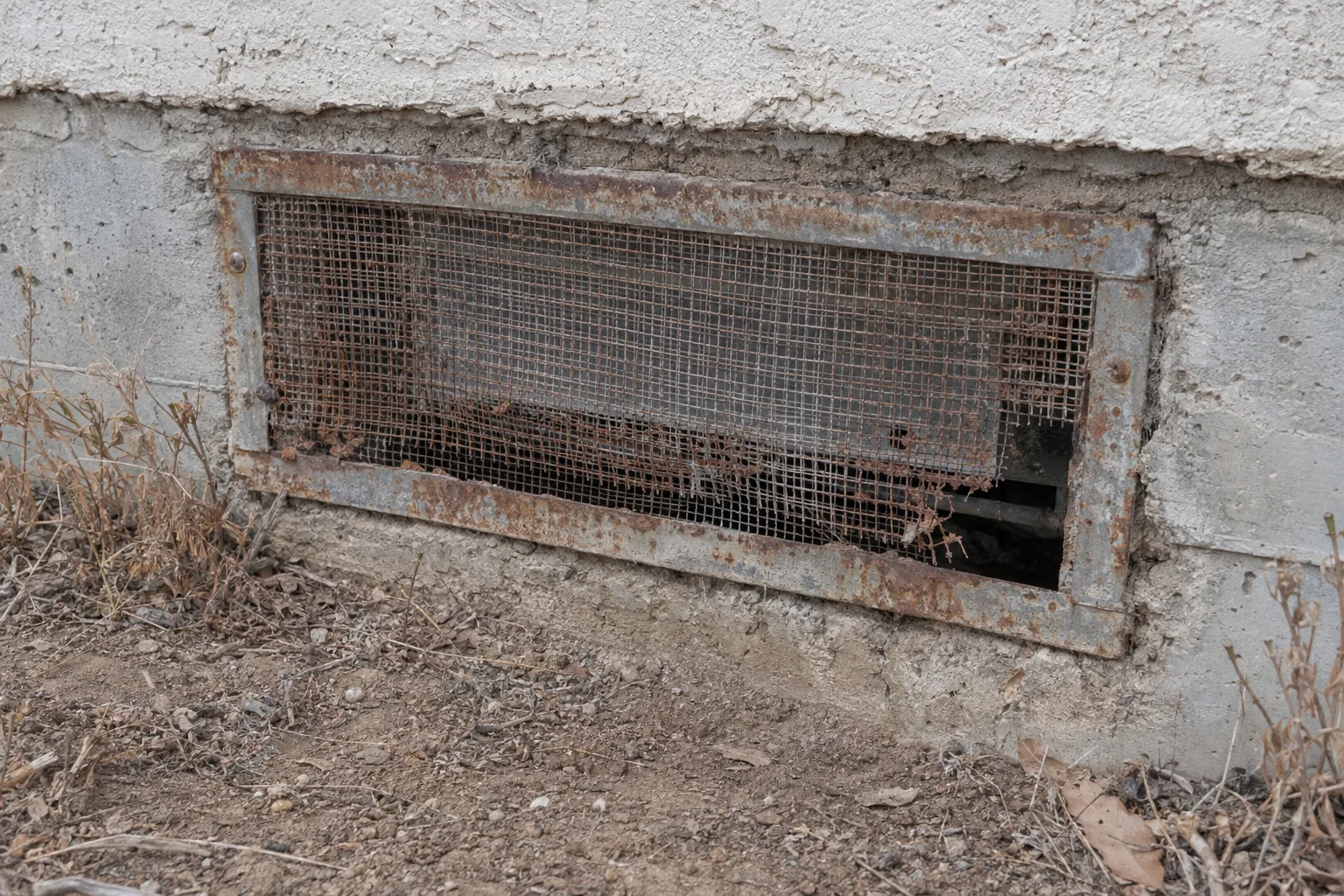
Foundation vents from the 1950s were not built to be inspected, they were built to be forgotten.
Getting under homes in this part of Los Angeles, we find original vent screens that have not been touched since the slab was poured. The galvanized mesh is mostly rust. The frame is pulling away from the stem wall, the short concrete wall that supports the structure above the foundation, in two or three places. You can put your fingers through the gap.
The homeowner has no idea. They have had pest control visits. Traps in the garage, bait stations near the perimeter. The rodents keep coming back. Nobody has been on their back under the house with a flashlight mapping the actual openings.
One property in Canoga Park had four foundation vents. Two were intact. One had mesh that had corroded through the center, looked fine from the outside, but the middle was gone. The fourth had been patched with expanding foam at some point. The foam had been chewed through. There was a burrow path leading directly into the crawl space from below the south wall.
That is the level of inspection crawl space rodent sealing requires. Surface checks do not find this. Below-grade work starts from the ground up, literally.
The right seal for a foundation vent is not the same as the right seal for a pipe sleeve, and using the wrong one costs you the job.
Before any material goes in, the crew photographs every confirmed opening. Each one is measured. Surface type, size, and proximity to soil contact are all documented. That information determines what gets used where.
A small pipe sleeve gap, the clearance between a plumbing or conduit pipe and the material it passes through, gets a different treatment than an open foundation vent frame. A block wall void, an unsealed gap in a concrete masonry unit wall, gets a different material again.
This is not excessive. It is the difference between a seal that holds for years and one that fails in the first wet season. You receive the photograph record and the written findings at the end of the job. That documentation is yours.
Professional foundation rodent proofing covers distinct opening types, each with its own material standard.
We replace deteriorated screens with galvanized hardware cloth rated for below-grade moisture exposure. Frame gaps are sealed with materials that hold against both gnaw pressure and soil expansion. Original vent function, airflow, is maintained.
Every point where a plumbing or conduit pipe passes through the stem wall or foundation slab is inspected for clearance. Open sleeves receive copper mesh packing and appropriate sealant. No gap is left at these points, regardless of size.
Concrete masonry unit walls common in older Los Angeles construction often have unsealed cores at the top course. These are capped or packed depending on the void profile. Open CMU cores at the foundation perimeter are closed.
Any additional penetration, HVAC lines, utility conduit, or drainage runs, gets the same documentation and treatment as the primary entry points. Nothing gets categorized as too small to matter.
A crawl space sealing job produces two outputs: the sealed structure and the written record of what was done.
The crew accesses the crawl space and walks the full perimeter of the foundation. Every foundation vent, pipe sleeve, and block wall section is checked. Photographs are taken before any work begins. Active rodent signs, burrow paths, grease trails, and droppings are documented by location. Below-grade pressure, the condition where rodents are actively probing the foundation perimeter, leaves visible evidence. We record it.
Work begins once the full inventory is documented. Openings are addressed by type, not by what is easiest to reach first. Moisture-rated materials go into moisture-exposed locations. Gnaw-resistant materials go into locations with confirmed rodent contact. The sequence is determined by what the inspection found, not by a uniform checklist applied regardless of property conditions.
At job completion, the homeowner receives a written record: every opening identified, the material applied to each, and the location of each sealed point. If active Norway rats, Rattus norvegicus, the ground-burrowing species most associated with crawl space entry, were found during the inspection, population status and any trapping placement is noted. This record supports both future retainer visits and any compliance documentation a landlord may need.
Yes. Before any material goes in, the crew photographs every confirmed opening, measures it, and documents surface type, size, and proximity to soil contact. You receive that photograph record and the written findings at the end of the job.
Below-grade openings sit at or near soil contact. Moisture, ground pressure, and decades of settling all work against them. Materials that hold at roofline elevation can fail quickly in contact with soil and standing water, so foundation work uses separate material standards.
No. Deteriorated screens are replaced with galvanized hardware cloth rated for below-grade moisture exposure. Original vent function, airflow, is maintained while gnaw and soil pressure are sealed out.
Before January. Winter rainfall floods ground burrows and sends rodents actively probing for dry interior access. Below-grade pressure peaks during and after sustained rainfall, so having openings sealed ahead of the wet season matters most.
A written record listing every opening identified, the material applied to each, and the location of each sealed point. If active Norway rats were found during inspection, population status and trapping placement is noted. That documentation is yours to keep.
Homes built between 1945 and 1980 on crawl space foundations are the most common property type on our schedule. Older homes toward the hillside communities adjacent to Topanga Canyon are also within our dispatch range.
Rodents living in ground burrows outside your foundation do not stay there when those burrows flood. They move toward your stem wall. We photograph every opening, document every sealed point, and deliver the written record before we leave.
Rodent R Us · 5336 Mecca Ave, Tarzana, CA 91356 · in**@*******us.com