Reading LA-specific rodent evidence across the San Fernando Valley daily.
The Evidence You Found Tells You More Than You Think. Here Is How to Read It
Kitchen, attic, yard, and walls each produce different signs. We explain what each indicates so you know what you are actually dealing with before any work begins.
This is a diagnostic story built for homeowners who found something and want a clear, documented read on scope. Not a guess at the door, but a real assessment tied to what the evidence points toward.
Entry point count and access difficulty move the number more than property size does.
Warning Signs of Rodent Activity Vary by Zone. And Each One Means Something Different
One dropping on a pantry shelf and a sound in the wall are not the same problem. They might be part of one problem, or two separate situations unfolding at once.
01
That distinction matters. A homeowner who finds droppings in the kitchen and hears scratching above the bedroom ceiling is probably dealing with two different zones of activity.
02
The kitchen sign suggests ground-level access near food. The ceiling sound points to something nesting in the attic space above. Same property. Different entry routes. Different response.
03
The location of the sign tells you more than the sign itself. A dropping on the counter reads differently than a dropping behind the refrigerator. A scratch at midnight reads differently than a thud at 4 AM.
This guide walks through each zone in plain language. What to look for, what it typically means, and when the evidence adds up to a call.
Los Angeles Rodent Signs Are Shaped by the Species That Dominates Here
The dominant rodent in Los Angeles is a climber, not a burrower. And that changes every sign you are reading.
Rattus rattus, the roof rat, is the species most LA homeowners are actually dealing with. It does not dig under your foundation. It travels along power lines, fence tops, and the branches of citrus and avocado trees. It enters from above. That behavioral profile produces a specific pattern of evidence that looks nothing like what general pest guides describe.
Rodent R Us operates from Tarzana, directly inside the San Fernando Valley neighborhoods where roof rat pressure is highest. The crew reads LA-specific evidence daily. That local context shapes everything in this guide.
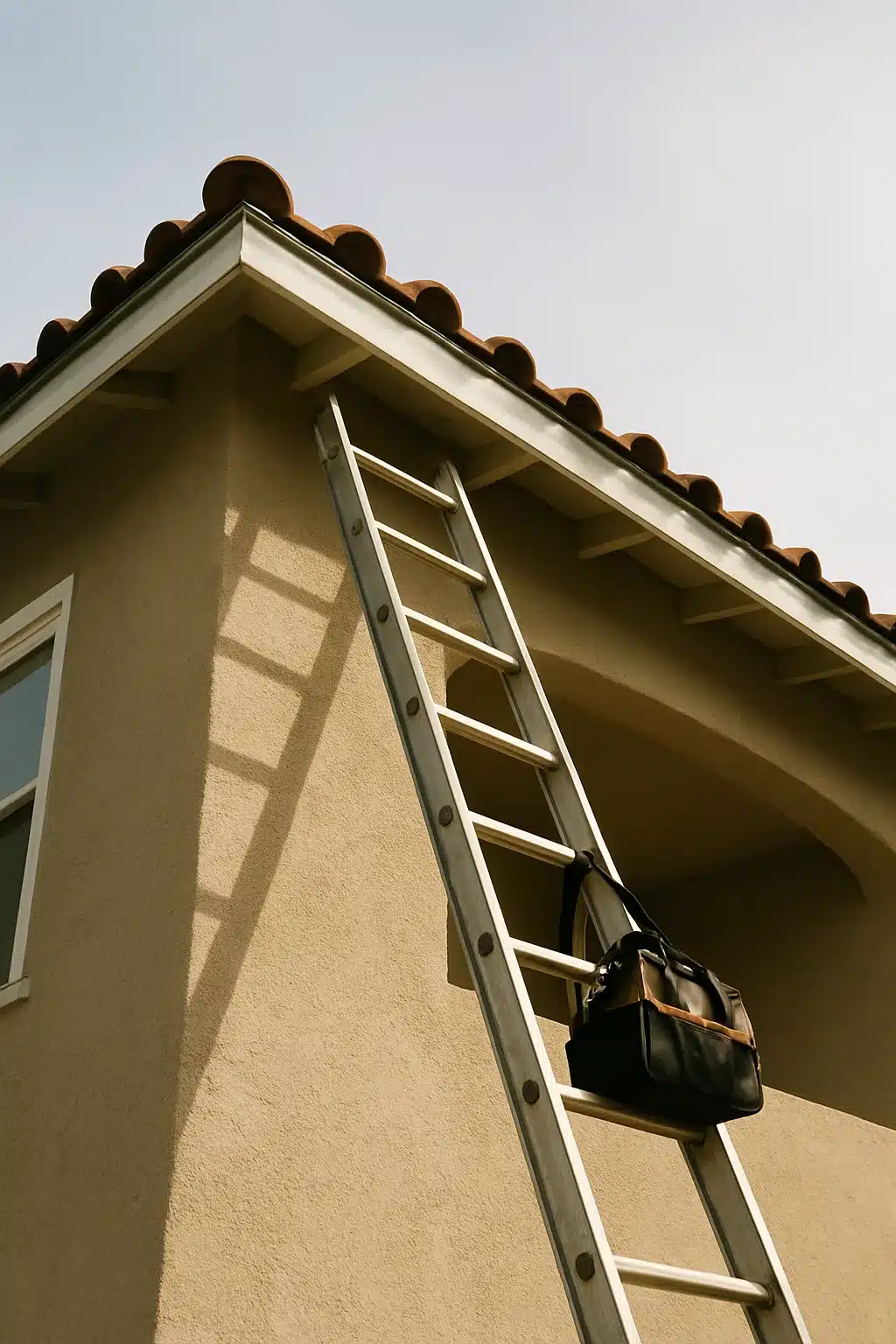
Roofline work at height is the single largest variable in most quotes.
Roof Rat Evidence
Concentrates along the upper perimeter of a room, in attics, along rafters, and inside wall voids accessed from the roofline.
Norway Rat Evidence
Concentrates at floor level, along baseboards, and under appliances.
When you find droppings on a pantry shelf rather than on the floor beneath it, that elevation is a data point. It points toward a roof rat traveling along the back of the shelf, not a ground-level rodent moving across the floor.
What We Found in a Sherman Oaks Kitchen. And What It Actually Indicated
“
A single pile of droppings led to an active attic colony the homeowner had no idea was there.
Sherman Oaks, San Fernando Valley
A homeowner in Sherman Oaks reached out after finding approximately fifteen droppings on a pantry shelf, clustered near a box of dried pasta. They had not heard any sounds. No other visible evidence. Their assumption was that one mouse had come in through the cabinet area and would probably go away.
The inspection found no entry points near the kitchen cabinets at all. The pantry itself was sealed on every side. What wasn't sealed was a gap where a gas line entered the wall cavity behind the stove, about three-quarters of an inch, just enough. That gap connected directly to a wall void that ran vertically up to the attic, where the crew found active nesting, accumulated droppings, and evidence of at least two adults and a previous litter.
The kitchen wasn't the problem. It was the endpoint of a travel route that started at the roofline.
That reading, following the evidence from the symptom back to the source, is what separates a professional inspection from a self-assessment. The homeowner had found real evidence and reached a reasonable conclusion. The conclusion was incomplete. The entry point was fourteen feet above the shelf where the droppings landed.
Frequently Asked Questions
Does one dropping mean I have a serious infestation?
Not necessarily. Volume and distribution are different measurements. Concentrated evidence in one area typically indicates a local travel route, one animal moving along one path to one food source. Widespread evidence across multiple zones usually indicates an established population. A written inspection tells you which situation you are in.
How can I tell how old the evidence is?
Fresh droppings are dark, moist, and have a sheen. Old droppings are gray, dry, and crumble when pressed. Fresh gnaw marks on wood or plastic are light-colored with rough edges, while old ones are dark. A mix of old and fresh in the same spot means the route has been active for a while.
What do scratching sounds at night tell you?
Roof rats are nocturnal and most active between dusk and 2 AM. Scratching between 10 PM and midnight, directly above a finished ceiling, is consistent with roof rat attic activity. Nightly sounds at the same time and location indicate an established route. A sound once every few nights points to a small population or a transient animal.
What areas does Rodent R Us serve?
The crew reaches Tarzana, Encino, Sherman Oaks, Woodland Hills, Calabasas, Reseda, Canoga Park, West Hills, Van Nuys, North Hollywood, and communities throughout the broader Los Angeles metro. Call (323) 805-0173 to schedule an inspection with a crew that works these neighborhoods daily.
What does a written assessment actually include?
A professional inspection converts what you found into a documented scope. It maps every confirmed and probable entry point on the property, presents findings zone by zone and evidence by evidence, and ties each finding to a specific part of the proposed work. Not a verbal rundown at the door, but a document you can make a real decision from.
Ready to Get Started?
Call Rodent R Us to schedule a same-week inspection. Tell us which zones you have checked and what you found. That information shortens the intake conversation and helps the crew prepare for your property's specific conditions before they arrive.