
We return on a set schedule to check every point we sealed. Scheduled re-inspections keep your seals intact year-round.
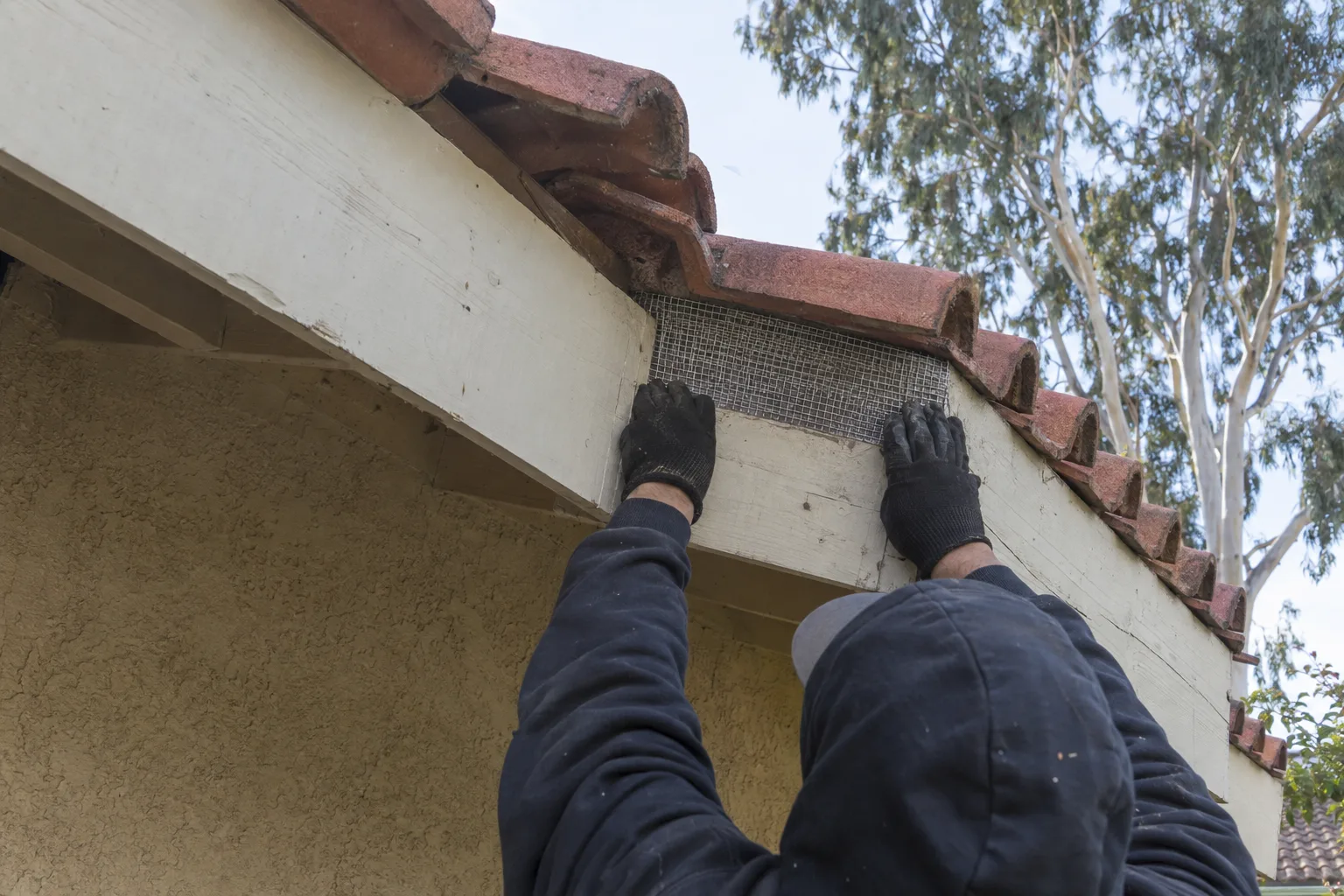
A rodent retainer is a scheduled maintenance agreement, not a subscription that delivers nothing.
Here is the plain version. After your initial exclusion job, Rodent R Us returns on a set interval to physically re-examine every previously sealed entry point. We check whether seals are holding. We look for new gaps that have opened since the last visit. If we find a breach, we close it that same appointment.
That is the entire model. Inspection, verification, re-sealing if needed.
A rodent retainer program is distinct from a one-time exclusion job. The one-time job seals what exists on day one. The retainer addresses what changes over time, because structures in Los Angeles do not stay static. Soil shifts. Sun exposure warps fascia boards. Heavy rain moves things. A seal that was solid in March may not be solid in October.
The service interval, the scheduled frequency of visits under your retainer agreement, is set based on your property type and prior infestation history. Most residential properties operate on a quarterly schedule. Higher-pressure or previously active properties may benefit from monthly visits.
There is no off-season for rodents in Los Angeles. That is a climate fact.
Temperatures stay mild enough year-round to sustain active rodent populations in every month. Citrus trees in Tarzana, Encino, and Woodland Hills fruit through fall and into winter, keeping food sources available when other regions go dormant.
Between January and March, El Niño-driven rainfall floods ground burrows across the San Fernando Valley. Displaced rodents push into structures from below. A foundation vent that held all summer faces new pressure in February.
After the 2025 Eaton and Palisades fires, rodent populations that lost habitat moved outward into adjacent residential neighborhoods, including communities throughout Tarzana and the western Valley that had no prior infestation history.
Year-round rodent pressure means re-entry risk, the probability that new rodents locate and exploit gaps, never fully stops. Structural settling in LA's seismically active environment adds to this. A building that doesn't move doesn't exist here. A single seal job, done once and never checked again, leaves properties exposed between visits.
Here is a pattern that is not a mystery once you understand what happened.
A homeowner calls after hearing scratching return above the bedroom ceiling. Exclusion work had been done about eight months earlier, entry points sealed, active population cleared. The work was done correctly. But no one came back.
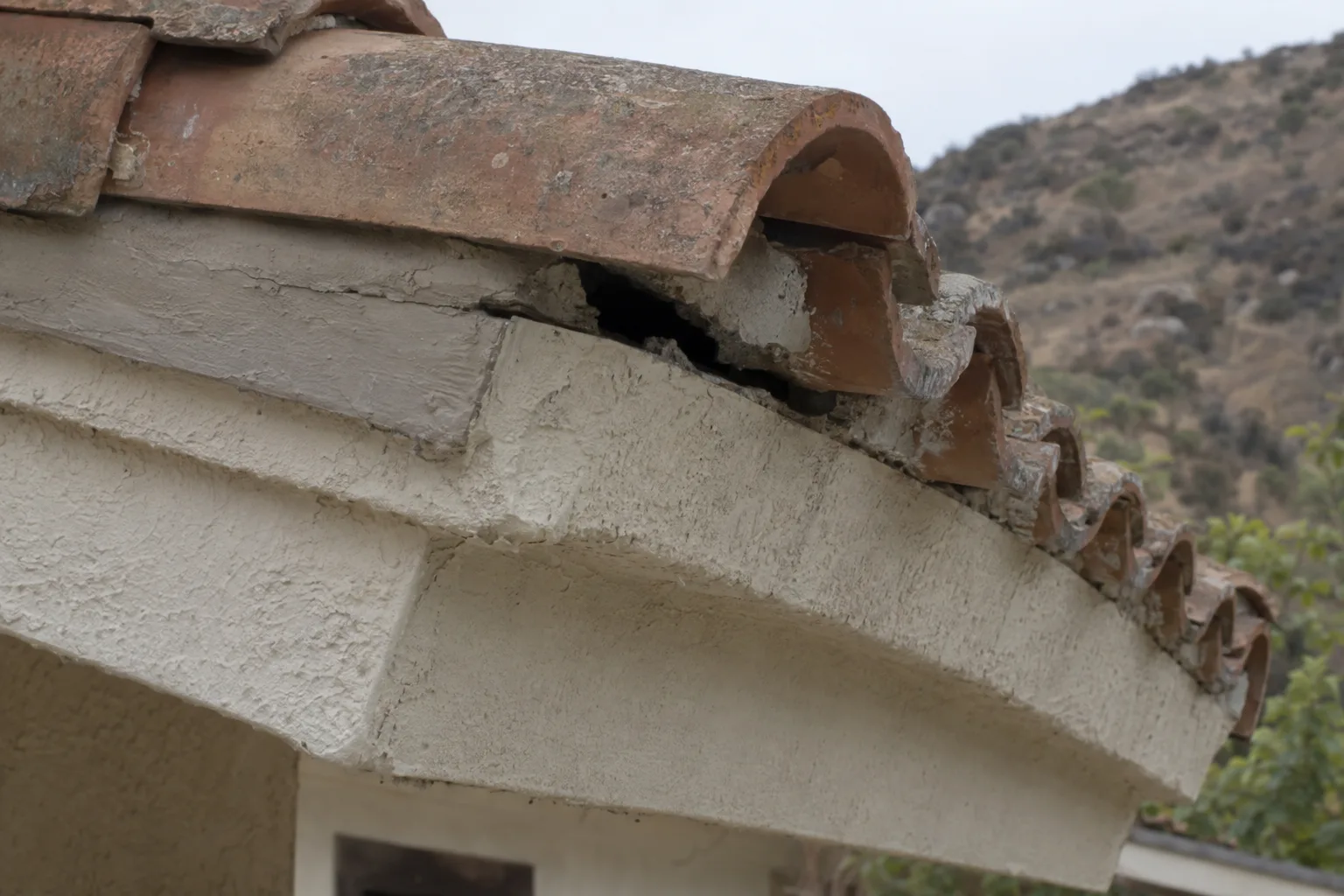
The home sits near the Topanga Canyon corridor in the western Valley. It has a clay tile roof with Spanish tile bird block gaps along the fascia. Those gaps were sealed in the initial job. Eight months later, a section of aging fascia had warped from summer heat exposure. The gap had reopened. Maybe a quarter inch. Enough.
A new roof rat, not the same population, a new one, found that gap within weeks. That is how population replacement works in an urban Los Angeles environment. Remove the animals, leave any opening in place, and the territory gets claimed again. Fast.
Here is what most homeowners don't realize about re-infestation: the returning animal is not the one that was removed. It is a new animal finding an opening that a previous occupant already proved was viable. The gap is the advertisement.
Under a retainer plan, that warped fascia section would have been caught at the scheduled re-inspection before the new entry was established. The breach would have been closed the same day. No scratching. No second infestation.
The retainer is the structural answer to what happens after good work meets a living, shifting building over time.
Every retainer visit is a physical re-examination, not a phone check-in or a drive-by.
A crew member returns to your property on the scheduled interval. They walk every previously sealed entry point. They check for visual signs of compromise: warping, cracking, gaps, new gnaw marks, fresh grease trails near sealed areas. They check whether any new penetrations, plumbing work, cable lines, landscaping changes, have created openings that did not exist on the initial job.
That physical check is the service. It is not a sales visit.
If seal integrity is confirmed across the property, you receive that in writing, a documented record showing all points were physically inspected and holding. If a breach is found, we close it that visit. Same crew. Same materials. No second appointment required.
This is preventive exclusion: closing potential entry points before active rodent signs are present. The retainer is built on that operating principle.
Every return visit follows the same systematic scope as the original inspection.
The crew does not assume the initial seal held everywhere. They verify it. On every visit, here is what gets physically checked:
Fascia board integrity, soffit panel fit, open bird block gaps under clay tile.
Screen condition, seal adhesion, new soil movement or moisture damage around the vent frame.
Soffit vents, gable vents, any roofline penetration from plumbing or cable runs.
Bottom sweep and side door threshold compression, weathering, new gaps from settling or hardware change.
New construction activity, landscaping changes, tree branch growth approaching the roofline.
New entry points found during a retainer visit are documented by location and added to the property's ongoing record. The seal integrity check is the core deliverable of every scheduled visit.
If we find an open gap during your scheduled visit, we close it before we leave.
That is the standard. A retainer visit is not a diagnostic-only appointment that schedules a separate repair. If a breach is identified, whether it is a warped seal, a new penetration from recent utility work, or a gap that opened through structural settling, the crew carries materials and closes it that day.
The breach gets documented: location, size, cause where identifiable, material applied. That record is added to your property file. If the same point opens twice within a short interval, that pattern tells us something about the underlying cause, settling, persistent rodent pressure at that location, or a surface condition that requires a different material approach.
Every return visit starts with a walkthrough of the full perimeter and all previously documented entry zones. The crew checks physical condition before anything else.
Any gap found open gets re-sealed with the same gnaw-resistant materials used in the original job. Material selection is matched to the specific surface and gap type, not applied uniformly.
A written visit record is produced at the end of each scheduled appointment. It documents what was checked, what held, what was re-sealed, and the date of the next scheduled interval. You receive that record before the crew leaves.
Rodent R Us serves residential and commercial properties across Los Angeles from our Tarzana location.
With 15 or more crew members available, scheduled retainer return visits are not held to a narrow window. We cover the San Fernando Valley and extend across the broader Los Angeles metro for both residential and commercial retainer clients.
Crew members ready for your scheduled return visit
The retainer begins after your first exclusion job is complete, not before.
The initial job seals the property. The retainer maintains it. Your property file carries forward from the initial job, every entry point we sealed is already on record before your first retainer visit begins.
The service interval is set based on your property type and prior infestation history. Most residential properties operate on a quarterly schedule, while higher-pressure or previously active properties may benefit from monthly visits.
No. If a breach is found during your scheduled visit, we close it that same appointment with the same crew and the same gnaw-resistant materials. No second appointment is required.
The retainer begins after your first exclusion job is complete. The initial job seals the property, and the retainer maintains it. Your property file carries forward so every sealed entry point is already on record.
Yes. A written visit record is produced at the end of every scheduled appointment. It documents what was checked, what held, what was re-sealed, and the date of the next scheduled interval, and you receive it before the crew leaves.
We serve the San Fernando Valley including Tarzana, Encino, Woodland Hills, Reseda, Canoga Park, and West Hills, and extend across the broader Los Angeles metro for both residential and commercial clients.
Contact our team today for a free consultation. Protect your seals year-round.
Ready to enroll? Tell us your property type, when your last exclusion job was completed, and which zones concern you most, attic, crawl space, perimeter, or all three. We'll reach out within one business day.
© 2026 Rodent R Us. Report every job Rodent Exclusion. Serving Greater Los Angeles.