Crawl space rodent sealing Los Angeles starts below the floor, not above it. We map every gap, vent, and pipe penetration before a single seal goes in.
Reaching Culver City, West Adams, Mar Vista, and across the LA metro.
Culver City has a large inventory of post-war wood-frame homes built on raised foundations with accessible crawl spaces. Those crawl spaces give roof rats a direct path into wall cavities and living areas. Trapping the animals you hear is not the same as closing the vents and pipe gaps that let them in.
Learn more about California rental law rodent exclusion in Sherman Oaks
Learn more about rodent inspection Los Angeles in Los Angeles
Sealing the crawl space means physically closing every gap, vent screen, and pipe penetration in the sub-floor zone. Here is how a Rodent R Us crawl space assessment is structured, step by step.
We enter the crawl space and walk the full perimeter from inside before we assess anything from the exterior. Active signs, gnaw marks, grease trails, nesting material, and droppings, are recorded by location and photographed.
Most Culver City homes east of Sepulveda and in the Tellefson Park area were built between the 1940s and 1960s. Original foundation vent screens on that era of construction are mild steel, and many have corroded past the point of being rodent-proof.
Multiple rounds of trapping, persistent scratching under the floor, and no explanation from the pest control company. We see this frequently in Culver City. The crawl space vents were never replaced and pipe sleeves were never sealed at installation.
We do not start sealing until the full entry point map is complete. Every confirmed gap is recorded with photos and location notes. You receive written findings that stay with the property, useful for real estate transactions and landlord compliance documentation.
The same inspection protocol applies on every job regardless of crawl space size. Foundation vents, pipe penetrations, block wall voids, access hatches, and sub-floor utility chases are all documented before material selection begins.
Foundation-level gaps are addressed in order, exterior vent screens first, then pipe sleeve penetrations, then block wall voids, then access hatch perimeters. Sequence matters because skipping steps leaves functional entry points open.
This sequence is one we recognize immediately when a Culver City homeowner calls.
A homeowner near the Culver City Civic Center schedules pest control after hearing scratching under the bedroom floor. Traps go in. Activity drops for a few weeks. Then the scratching comes back. Another round. By the time they call us, they have had four service visits and nothing about the access problem has been addressed.
Three foundation vent screens with corrosion holes wider than a quarter. An unsleeved dryer vent penetration through the mudsill. A gap at the crawl space access hatch where the original wood frame had shrunk away from the concrete stem wall. Active nesting in two locations under the sub-floor. None of that was identified or addressed before we arrived.
We replaced the corroded vent screens with galvanized hardware cloth, packed the dryer vent sleeve gap with Xcluder fabric, and re-framed the access hatch perimeter with treated material. Written documentation for each point was completed on-site. The homeowner had been managing the symptom for seven months. The entry points were always in the crawl space.
Crawl space rodent sealing finds what trapping alone never had to address.
- Rodent R Us, Los Angeles Field Operations
We enter the crawl space on every job. An exterior-only assessment misses what is happening at the mudsill, the sub-floor plumbing sleeves, and the interior face of the vent screens. No gap is assessed from a driveway.
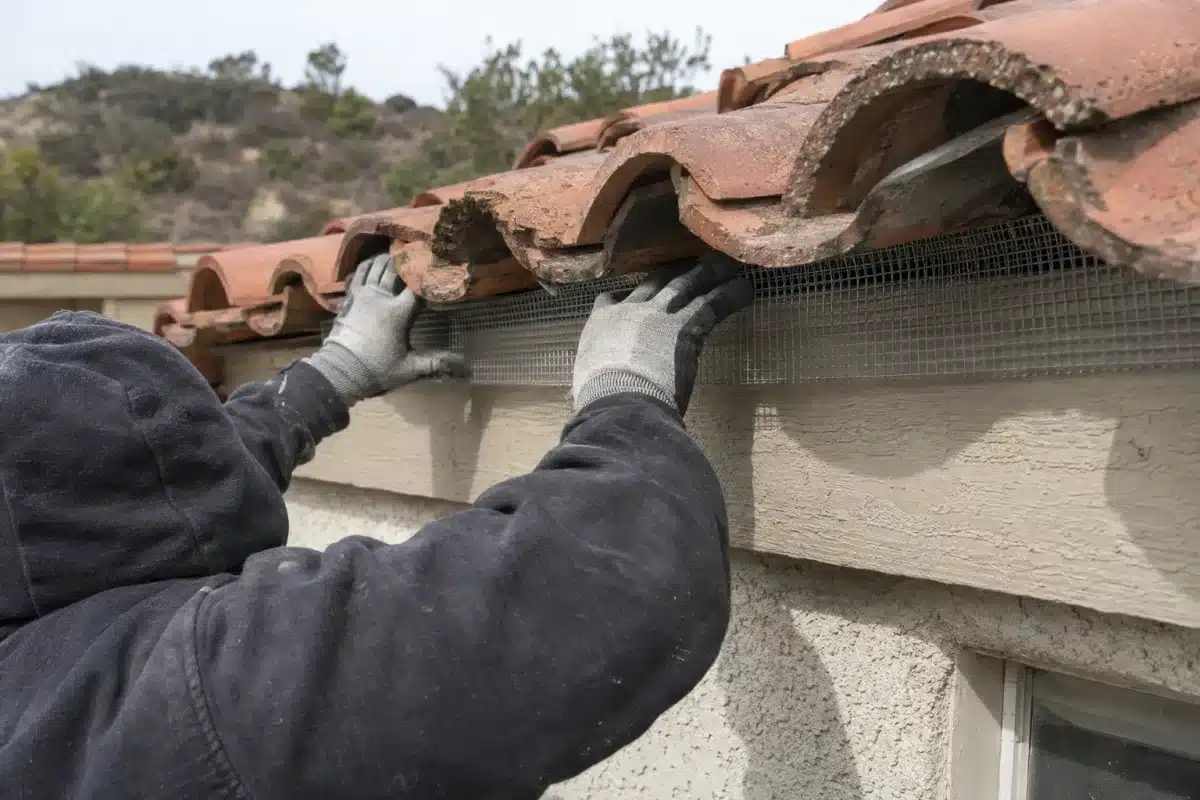
Hardware cloth, a galvanized steel mesh, replaces corroded vent screens and covers larger structural openings. Xcluder fabric fills pipe sleeve gaps and irregular voids at the mudsill. Concrete patching addresses foundation breaches where flexible fill will not hold long-term.
Every vent screen is assessed for corrosion and gap width from inside and outside. Screens that are corroded past functional integrity are replaced with galvanized hardware cloth fastened to the frame, not stapled or pressed in.
Every point where plumbing or electrical passes through the mudsill or stem wall is checked. Annular gaps around sleeves are packed with Xcluder fabric to the full depth of the void, not just surface-filled.
The perimeter gap around the access hatch is assessed for frame shrinkage and material condition. Wood-frame hatches on older Culver City homes frequently develop gaps as the framing dries over decades.
Dense ivy along the foundation, wood debris stored against the stem wall, and overgrown planting beds adjacent to the crawl space are documented. These are noted in the written findings because they affect re-infestation risk even after sealing is complete.
The right material matched to the right gap. No single product applied to every opening regardless of surface or depth.
The inspection begins inside the crawl space. We photograph active signs, measure gap widths at every vent screen, and check the interior face of every pipe penetration. Foundation vents are photographed before and after. Grease trails on the mudsill indicate travel routes and help us confirm which openings are actively used.
In Culver City neighborhoods like Blair Hills and the streets west of the downtown Culver City area, the coastal marine layer keeps sub-floor humidity elevated. That accelerates corrosion on original mild-steel vent screens and makes structural gaps wider over time than they would be in drier inland areas.
Foundation vents are addressed first, then pipe sleeve penetrations, then the access hatch perimeter, then any block wall voids. This sequence matters because addressing smaller gaps first while leaving a corroded vent screen open would leave the primary entry point functional.
Hardware cloth is cut to size and mechanically fastened, never friction-fit. Xcluder fabric is packed to the full depth of each void. Concrete patching cures before the job is closed. We do not leave uncured material and call the work done.
After sealing, we re-enter the crawl space and walk the full perimeter from inside to confirm every documented entry point is closed. The written findings document is completed on-site with photos tied to each location. If dead rodent removal or attic sanitation is needed as a follow-up step, that is noted in the findings and scheduled separately.
You receive the written entry point map before we leave the property.
Crawl space rodent sealing means closing every physical opening below the floor that a rodent uses to enter the building.
It is not treatment. It is not bait. It is structural repair, every confirmed gap mapped, documented, and sealed with material rated to hold against sustained gnaw pressure.
In Culver City, the dominant species is Rattus rattus, the roof rat. It enters from above at the roofline, but it also uses raised-foundation crawl spaces as a secondary access route and as a nesting environment. Homes in areas like Mar Vista adjacent and the blocks surrounding the Ivy Substation regularly have both roofline and foundation-level entry points active at the same time.
Trapping removes the animal inside. Crawl space sealing closes the access that made the crawl space available in the first place. Without sealing, population replacement happens within weeks because nothing about the building's physical access changed.
That is what crawl space rodent sealing Los Angeles actually solves for Culver City properties.

Rodent R Us serves residential and commercial properties across Los Angeles from our Tarzana dispatch location. With 15 or more crew members available, we schedule inspections and crawl space sealing jobs in Culver City without the multi-week delays that come from a limited crew calendar.
Same-week inspection availability applies to Culver City and the surrounding Westside neighborhoods. Call (323) 805-0173 to schedule.
Common questions about crawl space rodent sealing in Culver City and Los Angeles.
Most Culver City residential stock from the 1940s through 1960s was built on raised foundations with accessible crawl spaces. Original mild-steel vent screens on that construction era corrode over time, and the coastal marine layer accelerates that process. Corroded screens develop gaps wide enough for a roof rat within decades of installation. Those gaps are rarely identified or replaced unless someone specifically looks for them.
We enter the crawl space on every job. An exterior assessment cannot confirm active signs, measure interior gap widths at vent screens, or identify pipe sleeve penetrations at the mudsill. Interior access is part of our standard protocol, not an add-on.
Yes. You receive a written entry point map and findings document at the end of every assessment. It records what we found, where we found it, what material was used, and what was sealed. That documentation stays with the property and is useful for landlord compliance records and real estate disclosures.
Material is selected by gap type. Galvanized hardware cloth replaces corroded vent screens and covers larger structural openings. Xcluder fabric is packed into pipe sleeve gaps at the mudsill to the full depth of the void. Concrete patching addresses foundation breaches where flexible fill will not hold long-term. We do not use foam sealant as a primary rodent barrier.
Many properties can be fully sealed in one visit. The scope depends on the number of confirmed entry points, the condition of existing vent screens, and whether active population removal is needed before final sealing. If additional steps are required, they are documented in the findings and scheduled sequentially, not left unaddressed.
Corroded vent screens and open pipe sleeves do not seal themselves, and new rodents find the same gaps the same way.
Call Rodent R Us or email us to schedule your crawl space inspection in Culver City. You will receive a written entry point map and findings document at the end of every assessment, not a verbal summary at the door. Our CA SPCB-licensed crew dispatches from Tarzana with same-week availability.
✉ in**@*******us.com • Serving Culver City, the Westside & Greater Los Angeles
Tell us where you found evidence and we'll get back to you, often the same day.
Or ask for a call back using the form below ↓